- وزير الصناعة والتجارة والتموين يعرب القضاة يقول إن الحكومة وضعت خطة للتعامل مع أي مستجدات قد تطرأ على حركة الملاحة عبر مضيق باب المندب، مشيرا إلى وجود ممرات بديلة يمكن اللجوء إليها في حال إغلاق مضيق باب المندب
- وزارة التربية والتعليم وتنمية الموارد البشرية، تعلن الأحد، أن امتحان القبول للطلبة الأردنيين الراغبين بالتجسير في الجامعات الأردنية سيعقد الخميس الموافق 17 أيلول 2026 في الجامعة الأردنية
- دائرة الأحوال المدنية والجوازات تتيح إمكانية طلب مجموعة من الشهادات والوثائق المسجلة مسبقًا بشكل إلكتروني كامل عبر تطبيق "سند"
- وزارة الأشغال العامة والإسكان، تنهي أعمال مشروع صيانة وتأهيل الطريق التنموي في محافظة معان، بتكلفة بلغت نحو 350 ألف دينار
- القوات الحكومية اليمنية تعلن استعادة مواقع غربي مدينة تعز والتقدم إلى مناطق جديدة بإسناد جوي
- وزير الطاقة والمعادن العُماني سالم بن ناصر العوفي، يقول الاثنين، إن مضيق هرمز سيفتح، مرجحا أن يكون الوضع الحالي قصير الأمد، وأن يستقر في المدى المتوسط
يطرأ نهار الاثنين ارتفاع طفيف في درجات الحرارة، ويكون الطقس حارا نسبيا في أغلب المناطق، وحارا في البادية والأغوار والبحر الميت والعقبة
Pressure is building in Brussels regarding Palestinian statehood

09/14/2026 - 13:01
By Daoud Kuttab
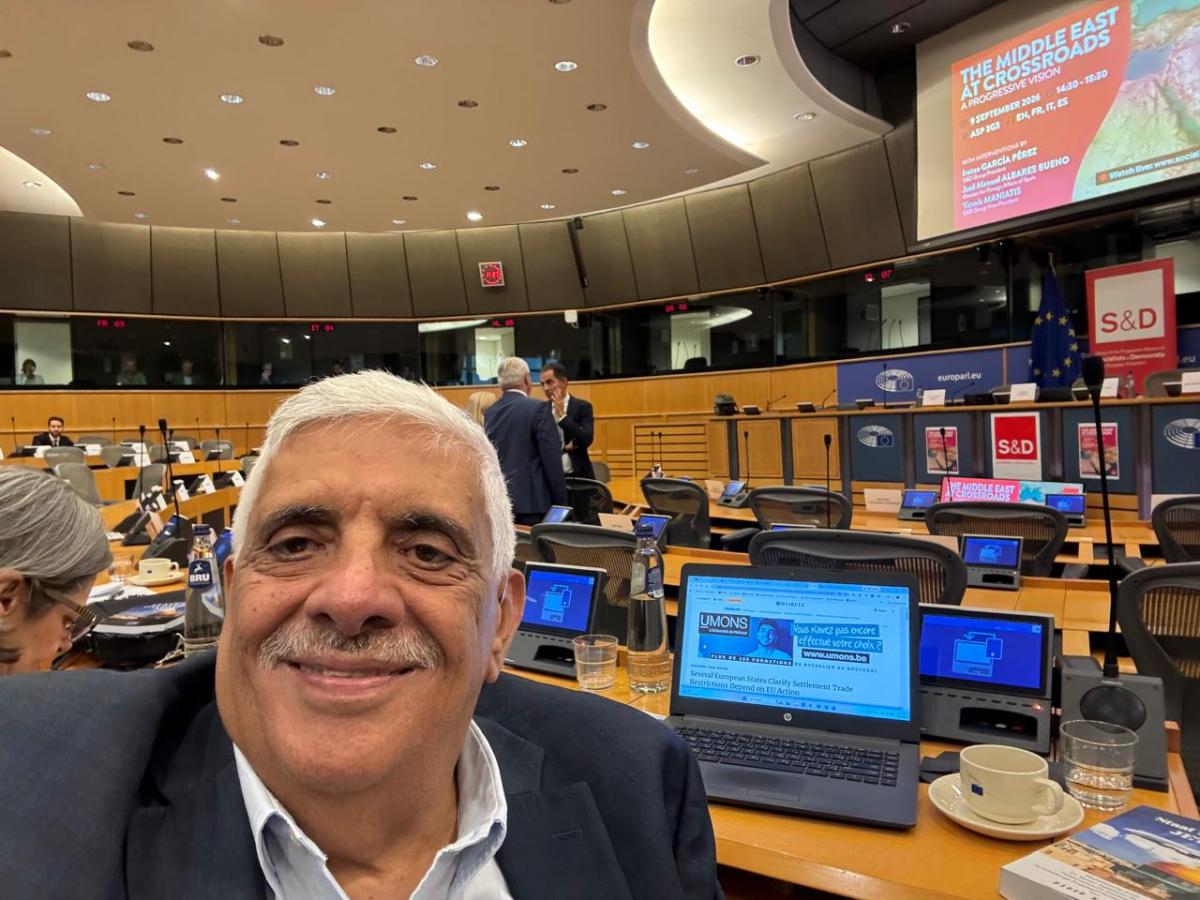
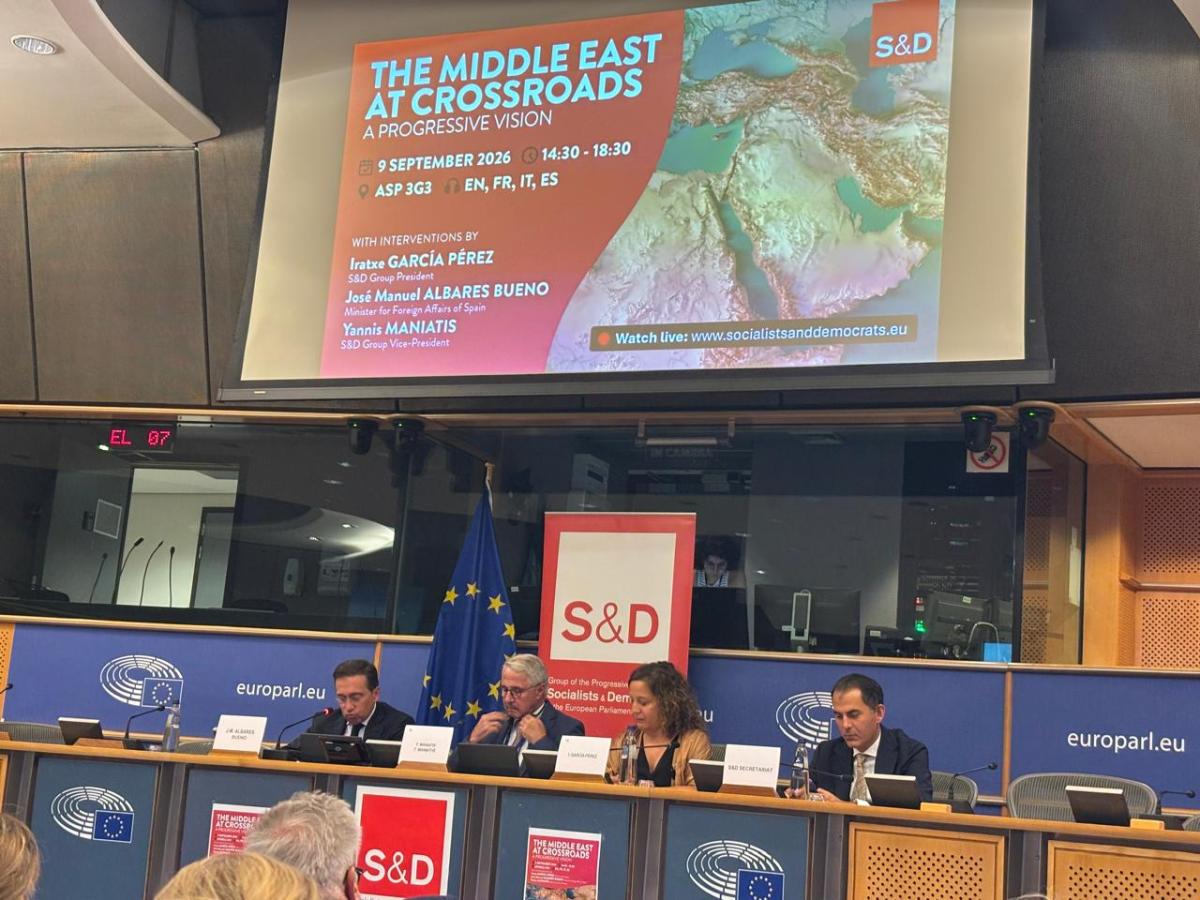
I spent September 9-13 in Brussels attending a conference titled “The Middle East at a Crossroads.” The conference was held at the European Union’s Brussels Parliament venue and was hosted by the European progressive alliance of Socialist and Democrats. While the S&D conference covered the entire region, Palestine was front and center throughout the two-day event.
The Brussels' visit was made possible because of the kind invitation of an Italian member of Parliament whom I met nearly thirty years ago. MP Lucia Annunziata is now a member of the Italian Social Democratic Party, but back then she was an important TV announcer for the Italian public service TV. She arrived in Jerusalem in 1988, as the first Palestinian intifada was at its height, along with her husband, Dan Williams, of the Los Angeles Times.
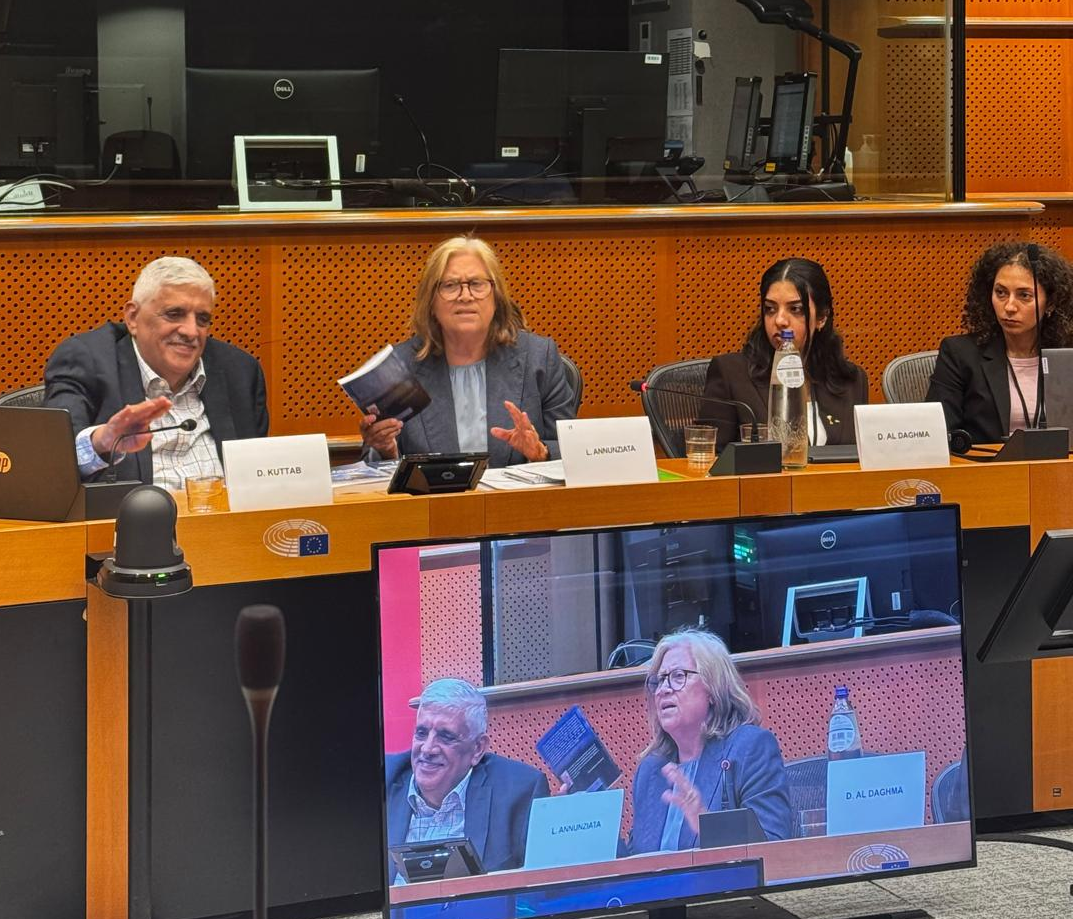
I was working with the LA Times at the time as a fixer/translator with Dan Fisher, and I am proud to have introduced, with Fisher’s help, the term Intifada in the Western lexicon. I lost touch with Lucia until a year ago, when she was part of an EU parliamentary observer mission assigned to observe the parliamentary elections in Jordan. We reconnected briefly, as her schedule was full, and I told her about my book. She assured me she would try to help give my book visibility. Lucia’s party, the S&D, was holding an important conference at the EU Parliament, and she wanted me to attend. She made sure a special session was set aside for me to talk about my book, State of Palestine NOW.
The opening session featured Spain’s Foreign Minister José Manuel Albares. Albares spoke negatively about Europe's double standard, which was clearly visible to all. Noting that Europe speaks frequently on human rights, the Spanish senior diplomat argued that the European Union’s policy must be coherent worldwide, including in Palestine. “If civilian lives matter, they must matter regardless.”
He said Spain will not tolerate any attempts at annexation and will hold all parties blocking the two-state solution accountable, and he strongly supported UNRWA. The Spanish foreign minister insisted that the Palestinian Authority must be present in all forums, including the Board of Peace and the Stabilization Force. He concluded that “Spain believes that international law must be defended in all conflicts.”
I was also impressed with the intervention of an Egyptian member of parliament from the Social Democratic Party, Maha Abdel Nassar. She called on Europe to “lead and not to subcontract regional issues to others,” and urged Europeans to be consistent in progressive ethics. “Peace without a political horizon is not peace. It is a pause” Abdel Nassar said that the US Comprehensive Plan may have stopped the war on Gaza (it didn't) but she said that the US plan "did not answer Gaza's future. Reconstruction without sovereignty, security coordination without self-determination, a transitional authority in Gaza with no Palestinian government at its head, this is not a valid route. We should say clearly: there will never be durable stability in this region without a credible, time-bound path to Palestinian statehood.”
One of the youngest and most popular Palestinian leaders, Dr. Dalal Saeb Iriqat, called on countries that haven’t yet recognized Palestine to do so. For countries that have, she called on them to make sure that their laws and economic policies differentiate between the State of Israel and the State of Palestine.
Iriqat, who received the highest votes in the recent Fatah elections for the 100-member Revolutionary Council, said that Europe should support Palestinian democracy by giving it a lifeline.
During the question-and-answer period, I intervened, saying that while many important regional conflicts were indeed at a crossroads, Palestine is the one that has consumed the world. “The Israeli genocide and the injustice to Palestinians must be remedied and the war criminals held accountable."
My European friends, as well as the very efficient Palestinian envoy to Belgium and the EU, Ambassador Amal Jado, later told me that, on foreign affairs, the EU requires unanimity of all 27 EU members on any important decision, such as sanctions. It seemed that Hungary, whose leader, Orban, is close to the Israeli Prime Minister Netanyahu, had vetoed any decision with teeth against Israel. Even after his recent election loss, countries like Germany and the Czech Republic have blocked sanctions. Ambassador Jado also told me that a small European country, Slovenia, where elections were held recently, has brought in a right-wing leader who is very close to the Israelis. Some reports have indicated that Israeli intelligence may have played a role in engineering the results of the elections in that direction.
As a result of vetoes from some pro-Israeli countries, the thinking is now to shift attention from the foreign policy path to economic and industrial cooperation. While EU policy requires unanimous support for any foreign policy decision, it requires a simple majority under the qualified majority path for economic issues such as country-of-origin disputes. Israel sells products and services made in the occupied Palestinian territories by settlers and markets them as made in Israel. This clearly violates the EU's trade agreements with the world. However, even on this path, a major stumbling block remains: Italy, a major founding member of the EU. The Italian Prime Minister, who belongs to a right-wing party that is close to Israel, has so far been a stumbling block. Public pressure, which is mounting in Italy, led their Prime Minister to commit to recognizing Palestine if and when all the Israeli hostages are released. But since that has taken place, Prime Minister Malony has yet to agree to recognize Palestine.
As the author of a book titled State of Palestine NOW, the EU parliamentarian asked me to speak about Palestinian statehood. The event took place late on a Thursday evening, a time when many diplomats leave for the weekend, but the conference room was overfilled with diplomats and aides, many of them from the younger age group.
I said that almost every conflict in the Middle East is connected to Palestine; therefore, an end to the occupation and Palestinian statehood would make a huge contribution in easing the tensions in the entire region.” I also pointed out that the last few years have seen the resurrection of the Palestinian case thanks in part to the Israeli decision to bar foreign journalists from Gaza, which allowed young Palestinian influencers to reach out to their peers around the world using various social media platforms. I ended my intervention by wondering out loud why the EU has passed 21 laws sanctioning Russia but not a single law censoring Israel and holding it accountable.”
The cause of Palestiniane has become known around the world and has been the main reason why many have moved to recognize Palestine, while some in Europe are still refusing to recognize this reality. I told the audience that October 7th was not a surprise because it followed 75 years of many Gazans having been forced out of their homes in the 1948 Nakba of Palestine and that it followed 57 years of an Israeli occupation that has no end in sight. Gaza was under an unauthorized siege for 17 years. I also noted that perhaps the biggest reason why the events in 2023 were not a surprise was the fact that, for 11 years, despite the breakthrough of the 1993 Oslo Accords, Israeli officials didn’t have a single public meeting with a Palestinian official. I told the EU parliamentarians and their aides that whenever Palestinian officials met with their international counterparts, the one statement that was repeated in every meeting was the fact that Palestinians need a political horizon. Without a political horizon, I explained, people lost the one ingredient that might have kept them calm. Hope. After so many years, it is surprising that anyone was surprised.
I explained that while some Palestinians are calling for a single democratic state between the river and the sea, right now what exists is Israeli Jewish supremacy between the river and the sea. I noted a Palestinian leader, Salah Khalaf (Abu Iyad), once said we need an independent state for five minutes, and after that we are willing to talk about confederation with regional partners.
Responding to a question about the upcoming Palestinian legislative elections, I argued that it is unusual for a country under military occupation to have elections because the occupiers can do many things to stop, delay, or control who wins. Nevertheless, I noted that Israel convinced the international community, especially the US, that the absence of Palestinian reform, including elections, was the reason why they have refused to talk to Palestinian leaders. I argued that if the goal is genuinely to give Palestinians a voice and to have a credible leader chosen by the people, then Israel must release the most popular Palestinian leader, prisoner Marwan Barghouti.
I also spoke about the Israeli continued ban on the entry of the international press but noted that, as a result, even though it came at a high price, young tech-friendly Palestinians were able to broadcast the Palestinian narrative through videos and social media around the world.
An Italian MP said that the trauma that many around the world have been witnessing has also seeped into the homes of many, including MPs. She told the story of her 16-year-old son who turns on his cellphone immediately after leaving school at 2 pm to watch the genocide happening in Gaza. “He repeatedly asks me, ' What are you doing about it.”
Those attending in the overflowed room were happy to hear directly from a Palestinian, and many said the engagement inside the European Parliament on Palestinian statehood was unprecedented.