- الأردن، يستضيف اليوم الاثنين، اجتماعا تشاوريّا لوزراء خارجية الدول العربية، و اجتماعا لمجلس جامعة الدول العربية على المستوى الوزاري
- هيئة تنظيم النقل البري تستحدث خط نقل جديدا يربط محافظة جرش بمنطقتي صويلح والمدينة الطبية، بتعرفة تبلغ دينارا و10 قروش للرحلة
- الدفاع المدني يتعامل مع حريق شب داخل مبنى مكون من 4 طوابق في منطقة القويسمة بمحافظة العاصمة، نتج عنه إصابة شخصين بضيق في التنفس
- استشهاد طفل وفتى، و إصابة شابان آخران، فجر الإثنين، برصاص قوات الاحتلال الإسرائيلي، ومستوطنين، في بلدة بيت أمر شمال الخليل
- وكالة تسنيم، نقلاً عن مصدر مطلع، تؤكد ليل الأحد-الاثنين، أن الوفد الإيراني رفض العودة إلى المحادثات الرباعية بعد تهديدات الرئيس الأميركي دونالد ترامب
- إصابة 54 شخصا وفُقد 18 آخرون في الانفجار الذي وقع مساء الأحد في منطقة رأس لفان الصناعية في قطر
- يكون الطقس صيفيا معتدل الحرارة في أغلب المناطق، وحارا في البادية والأغوار والبحر الميت والعقبة
Jordan and EU to Hold Historic First Summit in Amman: A Strategic Leap in Bilateral Ties
01/07/2026 - 11:10
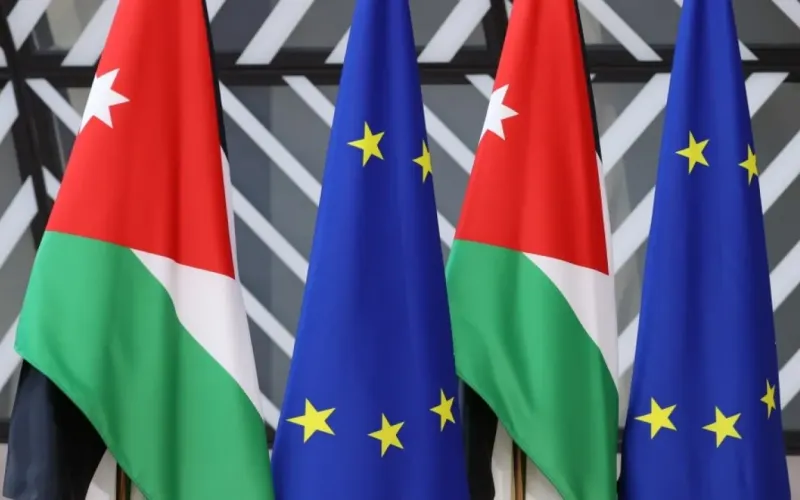
Jordan and the European Union are set to hold their first-ever bilateral summit in Amman this Thursday, marking a milestone described as "highly significant" in the trajectory of their long-standing relations. The summit will feature the participation of King Abdullah II alongside European Council President Antonio Costa and European Commission President Ursula von der Leyen. This high-level gathering convenes within the framework of the Strategic and Comprehensive Partnership signed between the two parties in January 2025, where leaders will deliberate on mechanisms to solidify political and economic cooperation and address the latest regional and international developments.
The Strategic Partnership encompasses five primary pillars which include political relations and regional cooperation, security and defense, economic resilience involving trade and investment, human capital, and the critical issues of migration, protection, and refugee support. This partnership is anchored by a substantial financial and investment package for the 2021–2027 period estimated at approximately 3 billion euros. This package comprises 640 million euros in grants, 1 billion euros in soft loans known as Macro-Financial Assistance, and nearly 1.4 billion euros in additional investments. The partnership specifically focuses on supporting Jordan’s stability amidst exceptional geopolitical challenges while driving political, economic, and administrative modernization and enhancing economic resilience.
This strategic relationship is built upon a well-established foundation dating back to the 2002 Association Agreement and the Jordanian–European Partnership Priorities for 2021–2027. Recent milestones leading up to this summit include the Association Council meeting held on July 15, 2024, and subsequent meetings between King Abdullah II and Antonio Costa in Brussels in January 2025, followed by another meeting on the sidelines of the UN General Assembly in New York in September 2025. Furthermore, His Majesty’s meeting with the EU High Representative for Foreign Affairs and Security Policy, Kaja Kallas, in December focused on building upon available economic opportunities, particularly through the upcoming summit and the Joint Economic Forum planned for 2026 which will feature investors from both sides.
During the summit, leaders will prioritize deepening the political and economic partnership while navigating foreign policy files and global challenges, specifically the situation in the Middle East. President Antonio Costa has reaffirmed that Jordan is a strategic partner playing a pivotal role in regional stability, noting that this first summit offers a significant opportunity to tackle shared challenges in turbulent times. He also expressed the EU’s profound appreciation for Jordan’s leadership, particularly its decade-long role in hosting Syrian refugees. Commission President Ursula von der Leyen echoed these sentiments, stating that both parties are elevating their unique relationship to a new level, while Kallas and other EU officials have consistently described the partnership as a successful milestone for security and economic opportunity.
Economically, the European Union stands as Jordan’s third-largest trading partner, representing over 12 percent of Jordan’s total trade in goods. In 2024, trade in goods between the two sides reached approximately 4.8 billion euros, with EU exports to Jordan accounting for 4.13 billion euros. In terms of services, the trade volume in 2023 was valued at 2.5 billion euros. Notably, Jordanian exports to the EU saw a significant growth of 45.7 percent during the first ten months of 2025, reaching nearly 520 million JOD. Major Jordanian exports include apparel, fertilizers, and pharmaceuticals, while imports from the EU primarily consist of vehicles, industrial machinery, and electrical equipment.
The financial dimension of the partnership includes significant funding through the Global Europe instrument, with 377 million euros in grants allocated between 2021 and 2024 for reforms, security, and green transformation. Since 2011, the EU has provided over 4 billion euros in humanitarian and macro-financial aid to assist Jordan with the Syrian refugee crisis. Furthermore, the European Commission has adopted an executive decision to fund a multi-year action plan for 2025–2027 totaling 228 million euros. This plan is distributed over three years with 93 million euros for 2025, 74 million euros for 2026, and 61 million euros for 2027, covering areas such as border management, trade facilitation, and the empowerment of women and persons with disabilities.
In addition to these plans, the European Commission has approved a 110 million euro program extending until 2027 to support economic modernization and job creation, with specific annual tranches. This program focuses on financial governance reforms, business environment improvements, and the transition to a green economy through renewable energy and green hydrogen infrastructure. An additional 80 million euro package has been allocated to support Jordan’s efforts in hosting Syrian refugees and supporting host communities. Furthermore, 63 million euros have been dedicated to competitiveness and investment between 2025 and 2027, alongside 25 million euros for integrated border management and a 30 million euro program for human capital development.
Finally, Macro-Financial Assistance remains a fundamental pillar of the relationship, utilizing long-term soft loans to support economic stability. Following various programs since 2013 that totaled over 1 billion euros, the European Parliament in 2025 approved a new 1 billion euro loan package for Jordan. The first 500 million euro installment was approved in April, followed by a second installment of the same value in December. These loans are linked to a reform program coordinated with the IMF and are designed to bolster the Kingdom’s financial resilience amidst regional tensions. European Parliament President Roberta Metsola emphasized that strengthening support for Jordan is an investment in a strategic partner that consolidates regional stability and shared European security.