- وفاة 3 أطفال أشقاء، الأحد، وإصابة والديهم، إثر تعرضهم لحروق بالغة في أنحاء الجسم، جراء حريق شب داخل شقة سكنية، في محافظة الزرقاء وفقًا لمديرية الأمن العام
- بدء التسجيل الأولي للراغبين في أداء فريضة الحج من الأردنيين وأبناء قطاع غزة المقيمين في المملكة، لموسم الحج 2027 ، اليوم
- جيش الاحتلال الإسرائيلي، شن صباح الأحد، غارات على جنوب لبنان، قال إنها جاءت ردا على إطلاق حزب الله طائرتين مسيّرتين
- قوات الاحتلال الإسرائيلي قصفت بالمدفعية الثقيلة، السبت، تل باط الوردة على أطراف بلدة بيت جن بريف دمشق الغربي، بأربع قذائف
- يكون الطقس الأحد معتدل الحرارة في أغلب المناطق، وحارا في الأغوار والبحر الميت والعقبة
Freedom House’s Misguided Democracy Rating for Jordan
A government crackdown on the Muslim Brotherhood after its political wing tripled its representation in parliament shows that Freedom House misjudged Jordanian political dynamics
12/15/2025 - 12:23
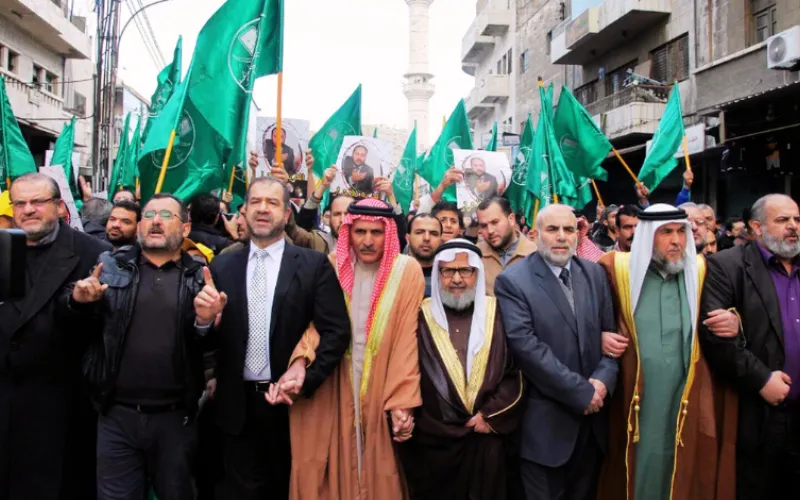
In 2025, Freedom House boosted Jordan’s democracy ranking to “partly free,” following four years of classification as “not free,” the group’s lowest of three ratings. The prominent Washington-based organization that ranks countries’ democracy levels justified Jordan’s improved rating, citing a “recently reformed electoral system [which] led to more competitive legislative elections and greater representation for political parties.” Last year, Jordan held national parliamentary elections, in which the Islamic Action Front (IAF) — the Muslim Brotherhood’s political wing — won 31 seats. Jordan’s largest opposition faction, the IAF, secured the most seats of any party in the 2024 race. In addition to the IAF’s performance, Freedom House further credited Jordan’s government for its electoral reforms, which led to a significant increase in the number of seats in parliament obtained through party lists, jumping from 12 to 104.
Freedom House’s optimism about democracy in Jordan quickly proved to be unwarranted. In April, the Jordanian government announced a ban against the Muslim Brotherhood, seized the group’s assets, and shuttered its offices. Jordanian authorities accused the Islamist organization of involvement in a plot to manufacture rockets to strike targets inside the Hashemite Kingdom. The Muslim Brotherhood denied any ties to the reported plot. Nonetheless, the Jordanian government's crackdown on the Muslim Brotherhood only months after its electoral gains demonstrated the hollow nature of its commitment to political pluralism. Jordanian authorities were hardly influenced by the popular support earned by the IAF during last year’s race in approving the new restrictions against the Muslim Brotherhood.
Given the past quarter-century of political dynamics, Freedom House should have been more cautious before elevating the country’s democracy ranking. In June 2011, Jordan’s leadership vowed that future governments would be appointed by a parliamentary majority. However, Amman never implemented this promise and 14 years later, lawmakers are unable to appoint prime ministers. The Jordanian public’s skepticism toward the regime’s political reform was evident in the low turnout during last year’s elections, with only 32 percent of citizens voting in the race. A 2024 poll revealed that 87 percent of Jordanians stated that the current parliament had no accomplishments for which it should be commended, highlighting widespread apathy toward the country’s legislature. With the Jordanian government preparing a transition of power, there is little evidence that Amman would genuinely be interested in sharing political power with rivals such as the Muslim Brotherhood. which has been accused of smuggling weapons inside the Hashemite Kingdom.
Jordan’s crackdown has not only been limited to the Muslim Brotherhood, both in 2025 and preceding years. In 2024, Amnesty International said that the Hashemite Kingdom arrested over 1,500 individuals at pro-Gaza protests since the Israel-Hamas war erupted in October 2023. In July 2025, Middle East Eye reported that Jordan continued to detain pro-Palestine activists over criticism of Amman’s policy toward Gaza. The increased arrests followed the Jordanian government’s ratification of the 2023 cybercrime law, which Human Rights Watch warned would “hamper free expression” and lead to additional censorship. The “greater representation” for political parties, which Freedom House praised, did little to stop Jordanian security forces from silencing civil society.
In addition to arrests of activists, the Hashemite Kingdom has continued its pressure campaign against the press. In May, Jordan’s Media Commission blocked 12 regional outlets, including Tunis-based Meem Magazine and London-based Arabi21, for “spreading toxic media” along with “attacking Jordan and its symbols.” Reporters Without Borders dropped Jordan 15 spots in its 2025 ranking of world press freedoms, to 147 out of 180, its lowest position in years. “Journalists are subject to close surveillance by intelligence services and are required to join the state-controlled Jordanian Press Association,” explained Reporters Without Borders. Last month, Jordanian authorities blocked Discord, an instant messaging and online gaming platform, after Moroccan youth used it weeks earlier to organize demonstrations.
While Jordan’s human rights condition remains far better than that of neighboring Saddam Hussein in Iraq or Bashar al-Assad in Syria, little evidence has emerged to suggest a strengthening of democracy in the Hashemite Kingdom since 2024. If anything, Jordan’s ban of the Muslim Brotherhood after the IAF’s strong electoral performance last year shows that the country’s elections have become less meaningful and human rights conditions have deteriorated. Given the numerous failed political reform attempts launched by the Royal Court in the past quarter-century, Freedom House would be wise to avoid overly rosy depictions of democracy in Jordan. After all, the the toothless lawmakers elected by the Jordanian public are not the primary decision-makers on key strategic policy matters.
Aaron Magid is the author of a new biography on King Abdullah. A former Amman-based journalist, his articles on the Hashemite Kingdom have appeared in Foreign Affairs, Foreign Policy, and Al-Monitor. He also hosts the podcast On Jordan. Follow him on X: @AaronMagid