- وفاة 3 أطفال أشقاء، الأحد، وإصابة والديهم، إثر تعرضهم لحروق بالغة في أنحاء الجسم، جراء حريق شب داخل شقة سكنية، في محافظة الزرقاء وفقًا لمديرية الأمن العام
- بدء التسجيل الأولي للراغبين في أداء فريضة الحج من الأردنيين وأبناء قطاع غزة المقيمين في المملكة، لموسم الحج 2027 ، اليوم
- جيش الاحتلال الإسرائيلي، شن صباح الأحد، غارات على جنوب لبنان، قال إنها جاءت ردا على إطلاق حزب الله طائرتين مسيّرتين
- قوات الاحتلال الإسرائيلي قصفت بالمدفعية الثقيلة، السبت، تل باط الوردة على أطراف بلدة بيت جن بريف دمشق الغربي، بأربع قذائف
- يكون الطقس الأحد معتدل الحرارة في أغلب المناطق، وحارا في الأغوار والبحر الميت والعقبة
Who Are “Saraya Awliya al-Dam”: Iran’s Arm of Influence in Iraq?
04/14/2026 - 11:46
Despite the complexities of the regional security landscape in recent years, Jordan has remained on high alert, relying on an advanced security and military system and well-recognized field efficiency that enabled it to protect its northern and eastern borders, particularly during the period when armed militias controlled large parts of southern Syria.
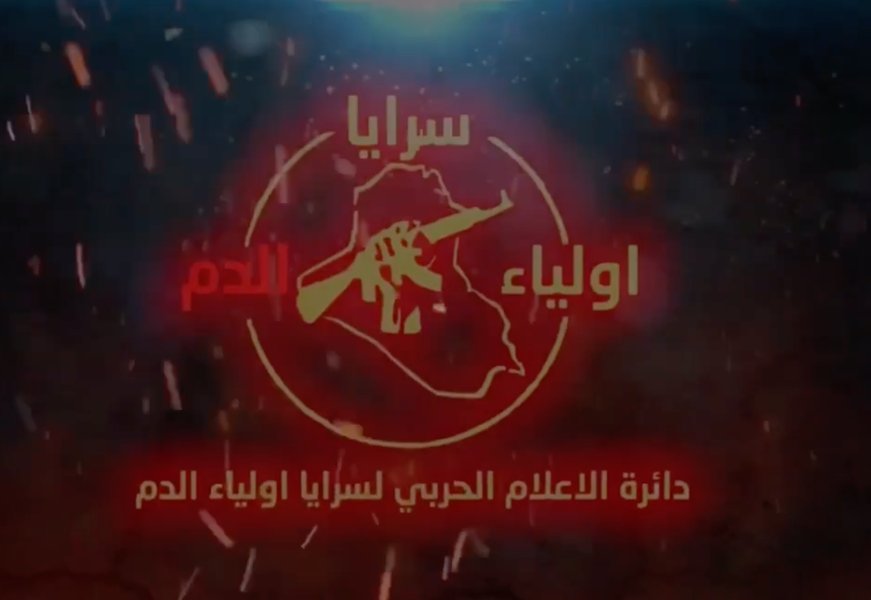
“Saraya Awliya al-Dam” is an Iraqi Shiite militia established in September 2020, following the assassination of Qassem Soleimani and Abu Mahdi al-Muhandis, and is considered a front for larger factions backed by Iran.
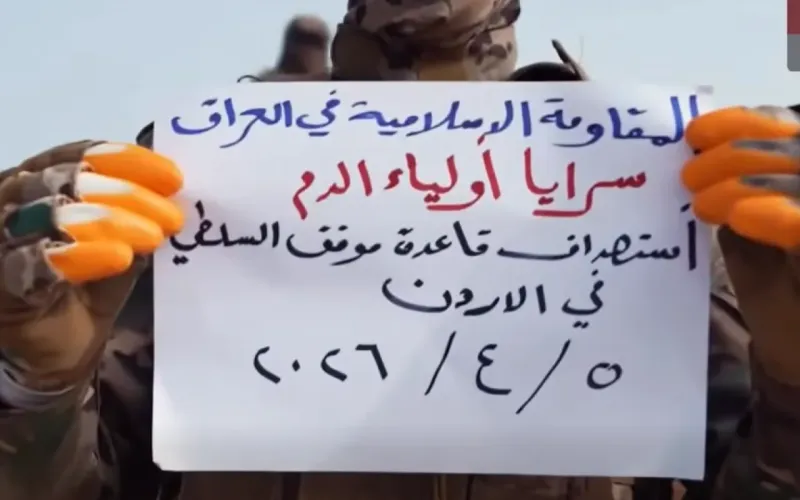
Its agenda focuses on “confronting the American and Israeli presence,” and it has claimed rocket and drone attacks targeting U.S. bases and regional countries such as Jordan, Kuwait, and Syria.
It is part of a broader network comprising more than 60 armed militias in Iraq by 2026, some of which operate under the Popular Mobilization Forces and receive funding and training from Iran.
“Saraya Awliya al-Dam” is regarded as one of the armed factions whose influence has grown in the Iraqi and regional landscape, particularly in the years following the assassination of key figures linked to Iran. The militia presents itself as part of what it calls the “Islamic Resistance in Iraq,” demonstrating a clear commitment to an ideology hostile to the United States and Israel.
In this comprehensive analysis, we review the origins of this militia, its evolution, the scope of its activities, and its regional ties, with a focus on its role within the context of Iraqi armed militias up to 2026:
The Origins of “Saraya Awliya al-Dam”
“Saraya Awliya al-Dam” is an Iraqi Shiite armed group widely believed to act as a front for more established factions within Iran-aligned militia networks in Iraq. The group was formally established in September 2020, following the dramatic events at the beginning of that year, specifically the killing of Iranian Quds Force commander Qassem Soleimani and the deputy head of Iraq’s Popular Mobilization Forces, Abu Mahdi al-Muhandis.
The group adopts Shiite ideological doctrine and focuses its declared attacks on targeting U.S. forces in Iraq and the region, as well as Israeli interests. It is often linked to factions such as Asa’ib Ahl al-Haq or Kata’ib Hezbollah Iraq, indicating that its activities may be part of a coordinated strategy within the broader Iranian axis.
The militia emerged amid escalating regional tensions and in response to the assassinations of Soleimani and al-Muhandis in January 2020. This event marked a turning point, prompting the emergence of new groups or the rebranding of existing ones under different names to intensify pressure on the U.S. presence. The militia announced its existence and claimed early rocket attacks against bases hosting U.S. forces, such as Ain al-Asad base and Harir airbase, reinforcing its image as an Iranian arm in the region.
Links and Iranian Support
“Saraya Awliya al-Dam” cannot be understood in isolation from the broader network of Shiite militias in Iraq linked to Iran. Reports indicate that this group, like many others, receives significant support from Iran, including funding, weapons, and training. This backing enables it to maintain operational capacity and carry out attacks. It is often described as a “front group” or an executive arm of Iranian agendas in the region, aimed at expanding Tehran’s influence and pressuring its adversaries.
Up to 2026, the group has continued to demonstrate notable operational activity. It has claimed responsibility for a series of drone and rocket attacks, affirming its readiness to confront what it describes as the “American-Zionist enemy.”
One of the most notable developments came in March 2026, when the group announced drone attacks targeting Kuwait, Jordan, and Syria. These attacks raised international and regional concern and prompted Arab countries to call on Iraq to take immediate measures to prevent its territory from being used as a launchpad for attacks on neighboring states. These actions are interpreted within a broader context aimed at pressuring countries allied with the United States and Israel.
“Saraya Awliya al-Dam” is considered an integral part of an Iran-backed axis seeking to undermine U.S. and Israeli influence in the Middle East. Its messaging is reflected in threats to U.S. interests in Iraq and beyond, and in its declared readiness to participate in any regional escalation in support of Iran. This orientation makes its activities a persistent source of concern for regional stability.
Why Does It Target Jordan?
Attacks targeting Jordan by “Saraya Awliya al-Dam” and other Iran-aligned Iraqi factions are part of a broader regional strategy. Jordan, due to its regional and international alliances, is viewed by these militias as a U.S. ally and therefore a target for Iran and its affiliated groups.
Jordan occupies a sensitive geopolitical position bordering Iraq, Syria, and the occupied Palestinian territories, making it a strategic point in any regional conflict. Iran-aligned militias view targeting Jordan as serving several objectives, including sending deterrence messages to the United States and its allies, destabilizing the region, and expanding Iranian influence. Reports suggest these militias exploit Iraqi territory as a base to launch such attacks, further complicating the regional security landscape.
These attacks have increased pressure on the Iraqi government, with Gulf states and Jordan urging Baghdad to take firm action to halt such assaults. The Iraqi government faces the challenge of balancing sovereignty while dealing with the influence of Iran-backed militias, a difficult task given their deep entrenchment in the country’s political and security fabric.
Despite the complexities of the regional security landscape, Jordan has maintained a high level of vigilance, supported by a highly efficient security apparatus that has successfully protected its borders and neutralized threats, reinforcing its image as a stable state capable of managing complex security challenges.
Armed Militias in Iraq in 2026: A Complex Landscape
Iraq in 2026 faces a complex security environment marked by the presence of a large number of armed militias. Some estimates suggest more than 60 militias, some predating the fall of Saddam Hussein in 2003, while others emerged afterward amid instability and conflict. These militias form an integral part of Iraq’s military structure, with some operating under the Popular Mobilization Forces, while others maintain greater autonomy or external loyalties, particularly to Iran.
Historical Context
The roots of many Shiite militias in Iraq date back to the pre-2003 period, formed in response to repression under the Baath Party regime. After the U.S. invasion and the ensuing instability, these groups expanded and evolved, driven by factors such as poverty, insecurity, and the desire to protect communities. In 2014, with the rise of ISIS, the Popular Mobilization Forces were formed following a religious decree by Grand Ayatollah Ali al-Sistani, incorporating many of these militias into a semi-official force, although some factions retained independent loyalties.
Iran’s relationship with many Iraqi militias remains a defining feature. Tehran provides funding, weapons, and training to numerous groups, making them operational arms of its regional agenda. This connection grants Iran significant influence in Iraq and complicates the Iraqi government’s efforts to assert full control over all armed groups.
The presence and activity of these militias pose major regional and international challenges. Iraqi territory is used as a platform to launch attacks on neighboring countries, placing Iraq in a sensitive position and threatening its national security and regional stability. The international community, particularly the United States, continues to pressure Iraq to control uncontrolled weapons and prevent its territory from being used in proxy conflicts.
Structure and Numbers
By 2026, the number of armed militias in Iraq is estimated to exceed 60, including 67 militias registered under the Popular Mobilization Forces. Their loyalties range between the Iraqi government and Iran, with varying agendas and objectives, making them a complex force that is difficult to manage.
Militia Name | Approximate Founding Date | Main Allegiances | Declared Objectives | Scope of Activity (until 2026)
Saraya Awliya al-Dam | September 2020 | Iran, Shiite axis | Confronting U.S. and Israeli presence | Rocket and drone attacks in Iraq, Jordan, Kuwait, and Syria
Kata’ib Hezbollah Iraq | 2003–2007 | Iran, Popular Mobilization Forces | Resisting U.S. presence, protecting Shiite shrines | Iraq, Syria, regional operations
Asa’ib Ahl al-Haq | 2006 | Iran, Popular Mobilization Forces | Resistance and political influence | Iraq, Syria, political participation
Badr Organization | 1982 | Iran, Popular Mobilization Forces, Iraqi government | Protecting Shiites and political influence | Iraq, strong military and political role
Mahdi Army | 2003, not significantly active militarily in 2026 | Muqtada al-Sadr, Iraq | Resistance and social justice | Previously active militarily, now focused on politics and protests
“Saraya Awliya al-Dam” represents a model of militias that emerged and evolved in Iraq after 2003, becoming part of a complex security and political landscape. Its formation is directly linked to major regional events, particularly the assassination of Qassem Soleimani and Abu Mahdi al-Muhandis, reflecting its nature as a group with a clear agenda targeting U.S. and Israeli presence in the region.
Iranian support provides it with the capability to conduct cross-border attacks, raising concerns among neighboring countries such as Jordan and placing the Iraqi government in a difficult position. Amid the presence of dozens of militias with overlapping loyalties and interests, Iraq continues to face a major challenge in asserting sovereignty and restoring the state’s monopoly over arms, a task that requires coordinated domestic, regional, and international efforts.