- الأردن، يستضيف اليوم الاثنين، اجتماعا تشاوريّا لوزراء خارجية الدول العربية، و اجتماعا لمجلس جامعة الدول العربية على المستوى الوزاري
- هيئة تنظيم النقل البري تستحدث خط نقل جديدا يربط محافظة جرش بمنطقتي صويلح والمدينة الطبية، بتعرفة تبلغ دينارا و10 قروش للرحلة
- الدفاع المدني يتعامل مع حريق شب داخل مبنى مكون من 4 طوابق في منطقة القويسمة بمحافظة العاصمة، نتج عنه إصابة شخصين بضيق في التنفس
- استشهاد طفل وفتى، و إصابة شابان آخران، فجر الإثنين، برصاص قوات الاحتلال الإسرائيلي، ومستوطنين، في بلدة بيت أمر شمال الخليل
- وكالة تسنيم، نقلاً عن مصدر مطلع، تؤكد ليل الأحد-الاثنين، أن الوفد الإيراني رفض العودة إلى المحادثات الرباعية بعد تهديدات الرئيس الأميركي دونالد ترامب
- إصابة 54 شخصا وفُقد 18 آخرون في الانفجار الذي وقع مساء الأحد في منطقة رأس لفان الصناعية في قطر
- يكون الطقس صيفيا معتدل الحرارة في أغلب المناطق، وحارا في البادية والأغوار والبحر الميت والعقبة
Cuisine and Celebrations as Bridges of Connection, How Pakistani Culture Integrated into Jordanian Society
“Naseej” Highlights Pakistani Faces in Jordan, Stories of Belonging Shaped Between Sahab and the Jordan Valley

02/12/2026 - 12:17
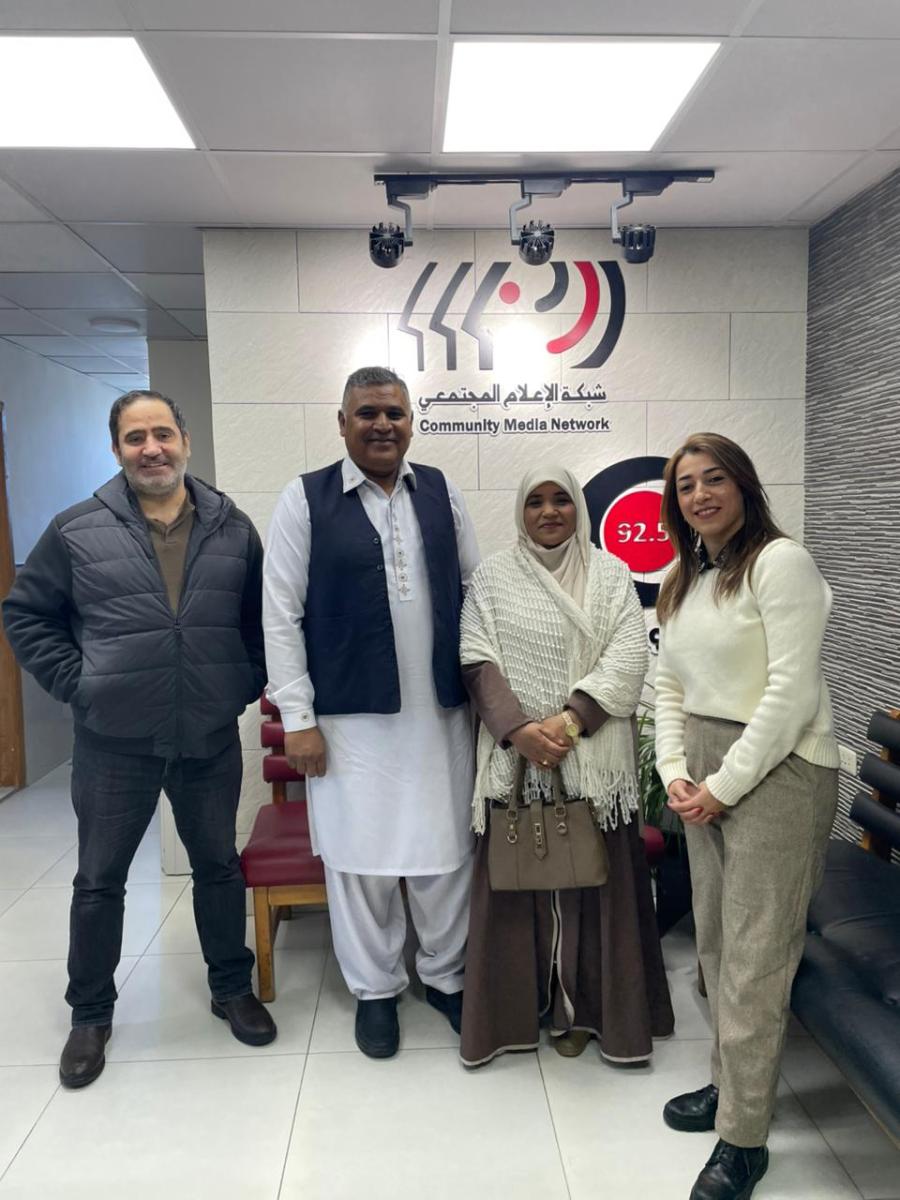
In a new episode of the program “Naseej,” broadcast on Radio Al-Balad 92.5 FM, a wide window was opened onto one of Jordan’s stories of human and social integration, shedding light on Pakistani faces that have become an authentic part of the Jordanian landscape, in a journey that has spanned decades of work, stability, and family building.
The program continues to present stories from the diverse “Jordanian fabric,” where cultures blend and backgrounds intersect to form a cohesive social mosaic. In its tenth episode, the host welcomed a family of Pakistani origin, Abu عمران and his wife Umm عمران, both born and raised in Jordan, specifically in the city of Sahab.
The Story Began in Sahab
Born in 1972, Abu عمران revisited his early memories in Sahab, a city he described as “close to the heart,” where he grew up among Jordanian friends and attended local schools. It was only in his teenage years that he realized his official nationality differed from his inner sense of belonging.
He said the local community embraced him from childhood and that he never felt like an outsider. The people of Sahab stood by his family, offering support and acceptance, until he came to see himself first and foremost as “a son of Sahab.”
Ummomran , also born in Sahab in 1972, spoke about her educational journey. She studied in the city’s schools, completed high school, and earned a diploma in Early Childhood Education. After marriage, she devoted herself to her family, beginning a different journey centered on raising and educating her children.
Abuomran also expressed pride in the relationship linking the Pakistani community to the Hashemite family, noting a family connection to Prince Hassan bin Talal. He affirmed that this relationship represents a great source of pride and honor. He also extended greetings and respect to Prince Rashid bin Hassan, praying for the continued protection of the Hashemite family and their enduring support for Jordan and its people.
He added that their sense of belonging is inseparable from their appreciation of the country’s leadership, stressing that they see themselves as an integral part of Jordanian society, connected to it through history, intermarriage, and a shared identity.
From Clothing Trade to a Mark in Construction
After completing high school in 1990, Abu عمران entered the labor market, starting in the clothing trade for three years before shifting to the construction sector, driven by his love of mathematics and engineering.
Over nearly 25 years, he worked in building projects across Jordan, from north to south, specializing in villa construction. He emphasized that practical experience and passion for his craft formed the basis of his success, despite not holding an engineering degree, noting that he has left a visible imprint on projects in Sahab and beyond.
He recalled a humorous moment while working at a military site, where officials were surprised by his fluent Jordanian dialect. They had prepared to receive a foreign worker in need of a translator, only to discover that he was of Pakistani origin but Jordanian in upbringing and speech.
An Educated Family and a New Generation
Family life formed a central pillar of the episode. Umm عمران spoke about their three daughters and one son, noting that the eldest daughter works as a kindergarten teacher, while the others continue their university studies, reflecting the family’s commitment to education and stability.
Abu عمران described his children as “pieces of the heart,” expressing pride in their academic ambition and religious values, and emphasizing that the love on which his marriage to his relative Umm عمران was founded laid the groundwork for a strong and cohesive family.
“I Am Jordanian,” Identity Beyond Papers
When asked about his identity, Abu عمران replied clearly, “I am Jordanian. My blood is Jordanian, my character is Jordanian. I hold Pakistani nationality, but I was born and raised here.”
He stressed that Jordan provided him with education, work opportunities, and security, urging young people, especially those of non Jordanian origin, to embrace ambition and determination and to nurture love for their homeland, saying that love of one’s country is part of faith.
He also noted that he currently helps coordinate with the Pakistani community in Jordan and maintains continuous contact with the Pakistani embassy to follow up on community affairs and strengthen ties with the broader society.
From Overland Migration to Settlement
In the second part of the episode, prepared by journalist Munira Al-Shatti, the story returned to the early beginnings of Pakistani arrival in Jordan in the late 1960s. The journey began overland through Afghanistan, Iran, and Iraq before reaching Jordan around 1969.
At that stage, the land was the first gateway to stability, as early arrivals worked in agriculture, particularly in the Jordan Valley, Kafrien, and the Southern Shouneh, before expanding into other sectors such as paper bag manufacturing, quarries, and various trades across the country.
Over time, relationships evolved beyond work into social and family bonds. Intermarriage between Jordanians and Pakistanis began in the 1990s and increased after 2000, strengthening feelings of stability and shared belonging.
Cuisine and Celebrations, Bridges of Connection
The episode also highlighted the presence of Pakistani cuisine at Jordanian occasions, where Pakistani rice and traditional dishes have become part of wedding feasts alongside mansaf, reflecting a vibrant cultural exchange.
It further explored wedding traditions, where celebrations extend over three days with Pakistani songs, dances, attire, and cuisine, later blending with Jordanian dabkeh and music, creating festivities that unite both cultures without contradiction.
One Fabric
The message of “Naseej” centers on highlighting the human stories of Jordan’s diverse communities, including Circassians, Chechens, Druze, Bedouins, refugees, and migrants, as interwoven threads forming a cohesive social fabric.
The episode “Pakistani Faces in Jordan” was not merely the story of one family, but a testimony to a long journey of integration that began with land and labor and extended through schools, universities, and intermarriage, culminating in a shared identity that transcends origin and nationality, settling on one enduring truth, that a homeland is built by living in it and participating in its daily life.