- وفاة 3 أطفال أشقاء، الأحد، وإصابة والديهم، إثر تعرضهم لحروق بالغة في أنحاء الجسم، جراء حريق شب داخل شقة سكنية، في محافظة الزرقاء وفقًا لمديرية الأمن العام
- بدء التسجيل الأولي للراغبين في أداء فريضة الحج من الأردنيين وأبناء قطاع غزة المقيمين في المملكة، لموسم الحج 2027 ، اليوم
- جيش الاحتلال الإسرائيلي، شن صباح الأحد، غارات على جنوب لبنان، قال إنها جاءت ردا على إطلاق حزب الله طائرتين مسيّرتين
- قوات الاحتلال الإسرائيلي قصفت بالمدفعية الثقيلة، السبت، تل باط الوردة على أطراف بلدة بيت جن بريف دمشق الغربي، بأربع قذائف
- يكون الطقس الأحد معتدل الحرارة في أغلب المناطق، وحارا في الأغوار والبحر الميت والعقبة
Al-Qatamin: The Budget Must Not Remain Hostage to Fuel and Tobacco Revenues

05/04/2026 - 08:48
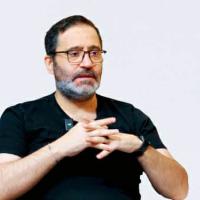
Former Labor Minister and economic expert Dr. Maan Al-Qatamin warned of serious economic repercussions awaiting Jordan as a result of the sharp rise in fuel prices, stressing that the Kingdom has come to occupy first place globally in gasoline prices, amid the interplay of fixed tax burdens and soaring international oil prices driven by escalating regional tensions that remain unresolved.
Speaking in an extensive interview with Radio Al-Balad, Al-Qatamin described the price of a liter of 90-octane gasoline reaching one full Jordanian dinar as "an astounding figure," noting that citizens traveling from governorates such as Tafilah, Aqaba, Irbid, or Mafraq now pay no less than 25 dinars in fuel costs for a single trip to the capital — before eating, drinking, or tending to any errand — on top of traffic fines that have become yet another burden. He said sarcastically: "We have a big problem on the global stage... and when it comes to oil prices, we've achieved the number one ranking worldwide — and that's no easy feat."
The Fixed Tax: The Hidden Weight on Top of the World Price
Al-Qatamin explained that the price Jordanians pay does not reflect the global rate alone, but carries the additional burden of a fixed tax that makes the final bill far heavier than what consumers pay in other countries. He noted that this tax represents a pivotal source of revenue for the public treasury, generating over one billion dinars annually, which makes any relief measure an enormously complex financial decision. He added: "I have a PhD in investment, and to this day I still don't understand what this pricing formula means or how it's calculated."
The economic expert warned that oil prices will not return to their previous levels in the foreseeable future, even if the regional war were to end tomorrow, stressing that medium and long-term contracts already in place, rising insurance costs for oil tankers, and supply chain complications will keep prices elevated. International experts, he said, do not expect oil prices to return to their former levels before 2026 at the earliest.
He emphasized that the impact of rising fuel prices will not be limited to filling up vehicles, but will inevitably ripple through transportation costs, production costs, and the prices of goods, food, and services across the board, saying: "God help us through this year — because we're still just at the beginning."
The Budget Held Hostage by Fuel and Tobacco
Al-Qatamin revealed a deep structural imbalance in the composition of public revenues, with the state budget excessively dependent on fixed tax receipts from fuel, tobacco, and telecommunications — two line items alone generating more than two billion dinars for the treasury.
He argued that this equation leaves citizens at the mercy of global market fluctuations and strips the government of any flexibility in responding to external shocks. He stressed that the only genuine solution lies in growing non-tax revenues through productive, strategically valuable government projects.
He also addressed the public debt file, warning of what he called a "vicious cycle," in which borrowing is used to finance debt servicing rather than investment, further widening the deficit and perpetuating the debt spiral. He called for a fundamental shift in directing borrowing toward productive investment projects rather than channeling it into paying interest and salaries. He cited Queen Alia International Airport as a successful model generating between 100 and 150 million dinars annually for the treasury, and called for replicating this approach across other vital sectors.
Renewable Energy: The Neglected Solution
Al-Qatamin called for a radical overhaul of Jordan's energy policy, drawing on the example of European countries such as the Netherlands, which has supplied electricity to entire rural communities through wind turbines. He argued that Jordan possesses enormous potential in wind and solar energy, yet this potential is being squandered by tax policies that deter investors — pointing specifically to taxes imposed on solar panels and elevated electricity tariffs on electric vehicle charging.
He affirmed that increasing the share of renewable energy in the national energy mix by 10% annually would gradually free Jordan from its dependence on global oil markets, and called for strengthening public-private partnerships to achieve this goal as swiftly as possible.
Jordan's Mineral Wealth: A Fortune Awaiting Transparency
Al-Qatamin raised the issue of Jordan's underground mineral resources with measured caution, noting that the Kingdom holds reserves of lithium, uranium, and silica — resources that have been under discussion since 2014 without being translated into tangible outcomes. He welcomed recent agreements in this area, but called on the government for greater transparency, saying: "I have a great deal of ambiguity about this file... and we need far more transparency."
Economic Modernization: Targets Out of Reach
On the Economic Modernization Vision, Al-Qatamin noted that it was built on the assumption of achieving annual GDP growth of 5.6%, yet reality has not exceeded 2.7% — roughly half the target. He pointed out that foreign direct investment has fallen short of its stated goal of four billion dollars per year, and stressed that no modernization plan will bear fruit unless growth surpasses the 5% threshold — a milestone that demands bold structural reforms still awaiting implementation.