- مصدر عسكري مسؤول في القيادة العامة للقوات المسلحة الأردنية – الجيش العربي، يصرح بأن منظومات الدفاع الجوي أسقطت فجر الخميس 8 صواريخ إيرانية كانت تستهدف أراضي المملكة
- مدعي عام محكمة الجنايات الكبرى، يقرر توقيف مواطن أردني مشتبه به بقتل فتاة أميركية في إيرلندا، مدة 15 يوما في أحد مراكز الإصلاح والتأهيل
- الهيئة الخيرية الأردنية الهاشمية، تسير قافلة عاشرة من المساعدات الإنسانية إلى الجمهورية اللبنانية الشقيقة، تضم 26 شاحنة محمّلة بالمواد الإغاثية والغذائية والطبية
- أمانة عمّان الكبرى تقول أنها ستقوم صباح غد الجمعة بتنفيذ أعمال إنشاء عبارة صندوقية في شارع الاميرة ثروت في المقطع الواقع من دوار الأمير راشد إلى تقاطع شارع الاميرة ثروت مع شارع الزنجبيل، و إغلاق جزئي وكلي لمسارب الشارع
- عودة أكثر من 203 آلاف لاجئ سوري طوعا من الأردن إلى سوريا منذ 8 كانون الأول 2024 وحتى 30 حزيران حسب المفوضية السامية للأمم المتحدة لشؤون اللاجئين
- استشهاد ثلاثة فلسطينيين وإصابة آخرين ، الخميس، بقصف للاحتلال الإسرائيلي على مدينة غزة
- وزير دفاع الاحتلال الإسرائيلي يسرائيل كاتس يبلغ وزير الحرب الأميركي بيت هيغسيث الخميس بأن الاحتلال عازم على إبقاء قواته في ما يسميها "المناطق الأمنية" التي أنشأتها داخل لبنان وسوريا وقطاع غزة
- يكون الطقس الخميس، حارا نسبياً في أغلب المناطق، وحارًا في البادية والأغوار والبحر الميت والعقبة
Jordan’s Water Security in Focus: Hazim El-Naser Maps a Path Through Climate Pressure and Regional Tensions

03/26/2026 - 11:46
Amman, Jordan- Hazim El-Naser, the former Jordanian minister of water, laid out a stark briefing on Jordan’s water future. He argued that climate change, refugee flows, and volatile regional politics collectively test the country’s resilience, while praising innovation and prudent planning as the linchpins of any sustainable solution.
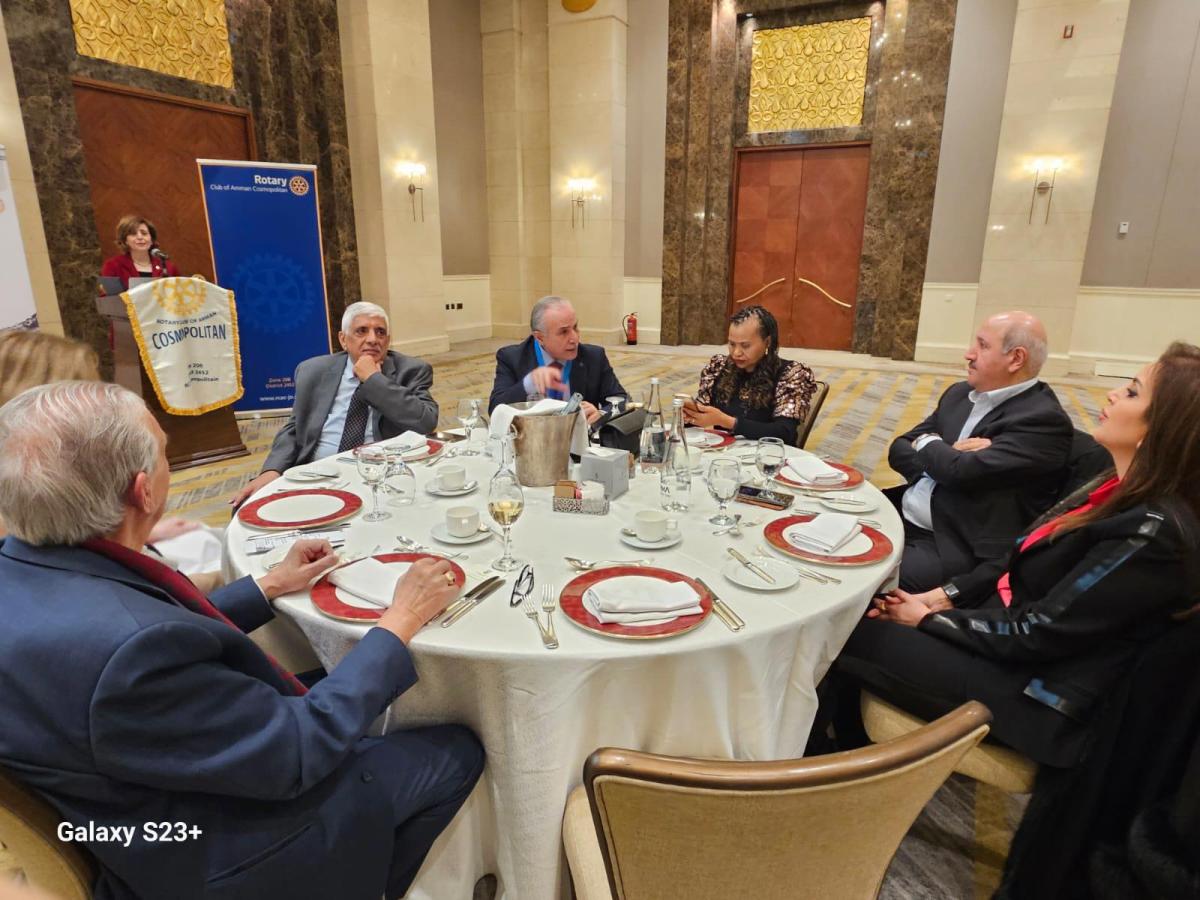
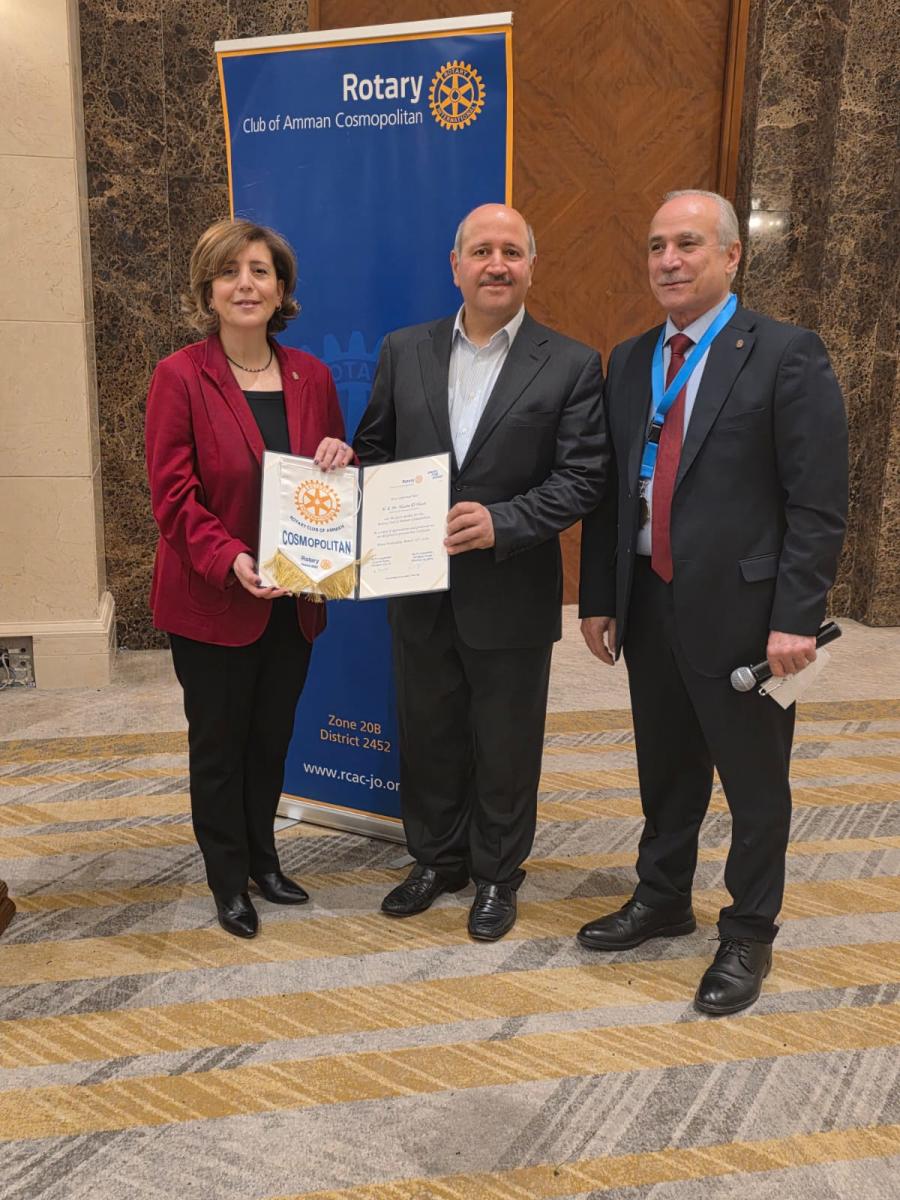
In a wide-ranging address held by the Rotary Club Amman Cosmopolitan at the Four Seasons Hotel on Wednesday El-Naser outlined both the problem and solutions to Jordan’s water scarcity. He said that there are three viable supply avenues, neighborly cooperation (when reciprocated), expanded deep groundwater resources, and the National Water Conveyance Project—coupled with robust demand management and smart technology, form the backbone of Jordan’s water strategy in the face of climate and conflict.
El-Naser warned that post-Gaza war realities have reshaped regional water cooperation. He said cooperation with Israel, once viewed as a potential path forward, became “neither technically viable nor politically acceptable” after the conflict and the surrounding pressures. “During the Gaza war, and after the Israelis tried to threaten Jordan with a water cut-off, this option became neither technically viable nor politically acceptable.” The remark underscored how security considerations can upend long-standing hydrological calculations. The latest war on Iran will also have its effect on Jordan as donor countries are likely to retract their commitments, although he insisted that the Jrodan water carier project will not be affected
Beyond geopolitics, the former water minister pointed to a little known but important potential to help address the water problem. He said that deep groundwater is another pillar of Jordan’s strategy, he said. “The future of Jordan, is secure when it comes to drinking water, with deep groundwater,” noting some aquifers reach depths of up to 2,000 meters. While the northern aquifer water requires treatment, the southern reserves are largely fresh. He argued that investment in groundwater research, and even new university programs, is essential to protect this resource.
The National Water Conveyance Project looms large in his outlook. Initiated in 2016, the project aims to secure a domestic water supply at scale, reducing dependence on cross-border sources. Though costly—“it takes time” and could exceed $3 per cubic meter of water—El-Naser argued the option is indispensable given regional uncertainties. “This project is so important, so strategic, it takes time.”
El-Naser stressed that climate change is not a distant threat but an ongoing crisis. He cited a long-running study he conducted with Stanford University to illustrate Jordan’s drought trajectory: “Over the last 40 years, according to a study that I participated with at Stanford University, every year we lose 0.6 millimetres. … If we go for another 40 years, as predicted by international climate models Jordan will lose,15 to 20 percent, depends on the area, of our annual rainfall.” The implication, he warned, is dire: less rainfall reduces surface runoff, river flows, and groundwater recharge.
The climate narrative, he contended, cannot be solved by short-term research or grand, top-down commands. “The climate change issue is much more complicated than we think. It’s much more dangerous than we think,” he said, stressing the need for time and smart policy adjustments rather than sweeping, uniform prescriptions. He was pointed in his critique of sweeping certainty: “I think the science hasn't reached the point where we exactly know the steps we need to take to minimize the impact of climate change.”
El-Naser turned to practicalities of planning and finance. He warned that water-sector projects—dams, irrigation schemes, and sanitation upgrades often requires years to reach completion. “Planning within the water sector, in particular water and sanitation and irrigation projects, you need between seven to nine years’ energy to complete a project.”
Yet the water expert did not stop at diagnosis. He highlighted Jordan’s resilience in the face of a massive refugee influx. The country took in 1.5 million Syrians, boosting population by about 22 percent and driving northward water demand up by roughly 40 percent. In this stress test, El-Naser praised Jordan’s “real adaptability and resilience,” noting that government, donors, and citizens joined in demand-management measures and conservation education. He lauded a national culture of water conservation: “Jordanians are very well aware of water scarcity.” He recalled school curricula that taught children to conserve scarce water and cited a simple example of a family cutting weekly water use as proof of impact. “The simple method that we had to do at our schools to save water… this is the best demand management in the world.”
Minister El-Naser highlighted Jordan’s leadership in water harvesting and smart management, particularly in the Jordan Valley. He lauded Aqaba Water Company as a model of innovation, where customers can monitor consumption in real time via mobile apps, with data translated into immediate cost implications. “Every customer in Aqaba, in his mobile app, receives per second how much water he consumes, and what this translates to Jordanian people.” He described remote monitoring of facilities—from reservoirs to wastewater treatment plants—as a hallmark of efficiency.
In the Q&A that followed, El-Naser acknowledged practical constraints to scaling smart-water networks nationwide. Expanding advanced metering and sensing infrastructure nationwide would require tens of thousands of new connections—“The number is like 70,000. Amman 1.2 million. It’s much bigger. It takes time. But it’s coming.” He also touched on the political economy of transboundary waters, candidly noting that cooperation with some neighbors remains challenging, and that “the extreme right” complicates genuine, durable collaboration.
Closing on a note of pragmatism, E-Naser invoked rainwater harvesting as a complementary, low-cost path to sustainability, encouraging local and household-led solutions alongside mega-projects. The bottom line, he suggested, is clear: Jordan must balance science-based planning, technological innovation, and realistic political expectations to secure water for its citizens today and tomorrow.