- أمانة عمّان الكبرى، تقر تعليمات حظر بيع وتداول المنتجات البستانية خارج سوق عمّان المركزي للخضار والفواكه والمنصة الإلكترونية المعتمدة من الأمانة
- فترة تقديم طلبات القبول الموحد للدورة العامة/ الصيفية 2026-2027 لمرحلة البكالوريوس تنتهي عند الساعة 12 من منتصف ليلة الخميس/ الجمعة
- المنطقة العسكرية الجنوبية، تحبط الأربعاء، عملية تهريب كمية كبيرة من المواد المخدرة، بعد رصد بالون موجّه محمّل بالمخدرات، كان في طريقه إلى الأراضي الأردنية
- مستوطنون، يواصلون الخميس، لليوم الثاني عشر على التوالي، محاصرة عدد من المنازل في بلدة قصرة، جنوب نابلس، وسط حماية من جيش الاحتلال الإسرائيلي
- الرئيس الأميركي دونالد ترامب، يهدد بتحميل "أي دولة" تساعد إيران أو تتعامل معها تجاريّا تبعات اقتصادية "وخيمة"
- تتأثر المملكة، الخميس، بكتلة هوائية حارة ويكون الطقس حارا نسبيا في أغلب المناطق، وحارا جدا في البادية والأغوار والبحر الميت والعقبة
Gaza’s Future Remains Uncertain, Says Award-Winning Journalist Daoud Kuttab

11/20/2025 - 13:57
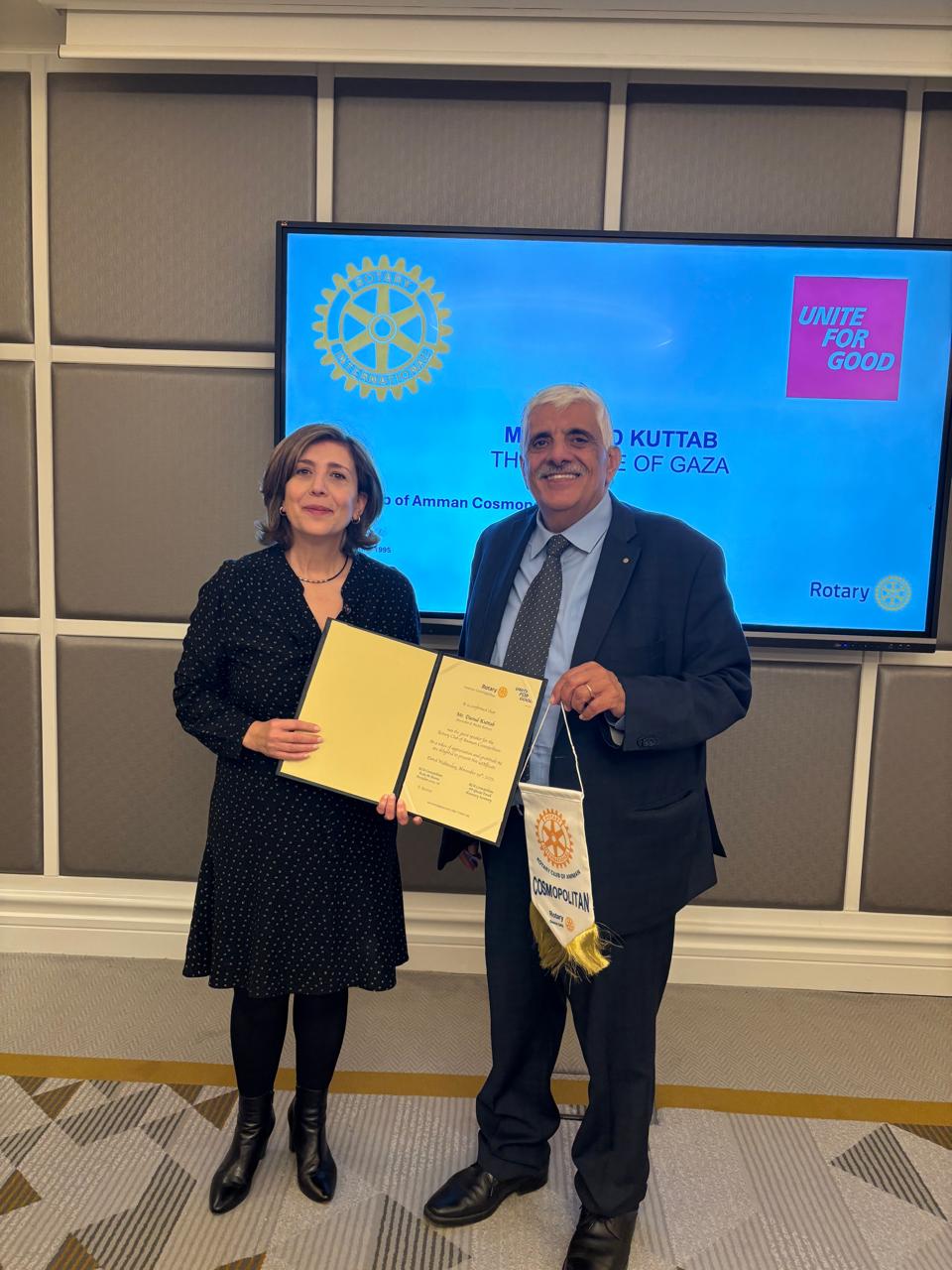
The humanitarian and political situation in Gaza remains dire, with reconstruction not having started, the ceasefire fragile, and daily life for Palestinians still marked by daily Israeli violence and economic hardship, award-winning journalist Daoud Kuttab said at a Rotary meeting. He warned that despite international efforts, including the recent UN Security Council resolution 2803, the reality on the ground is shaped largely by Israeli security priorities, leaving Palestinians with limited control over their own territory and their lives.
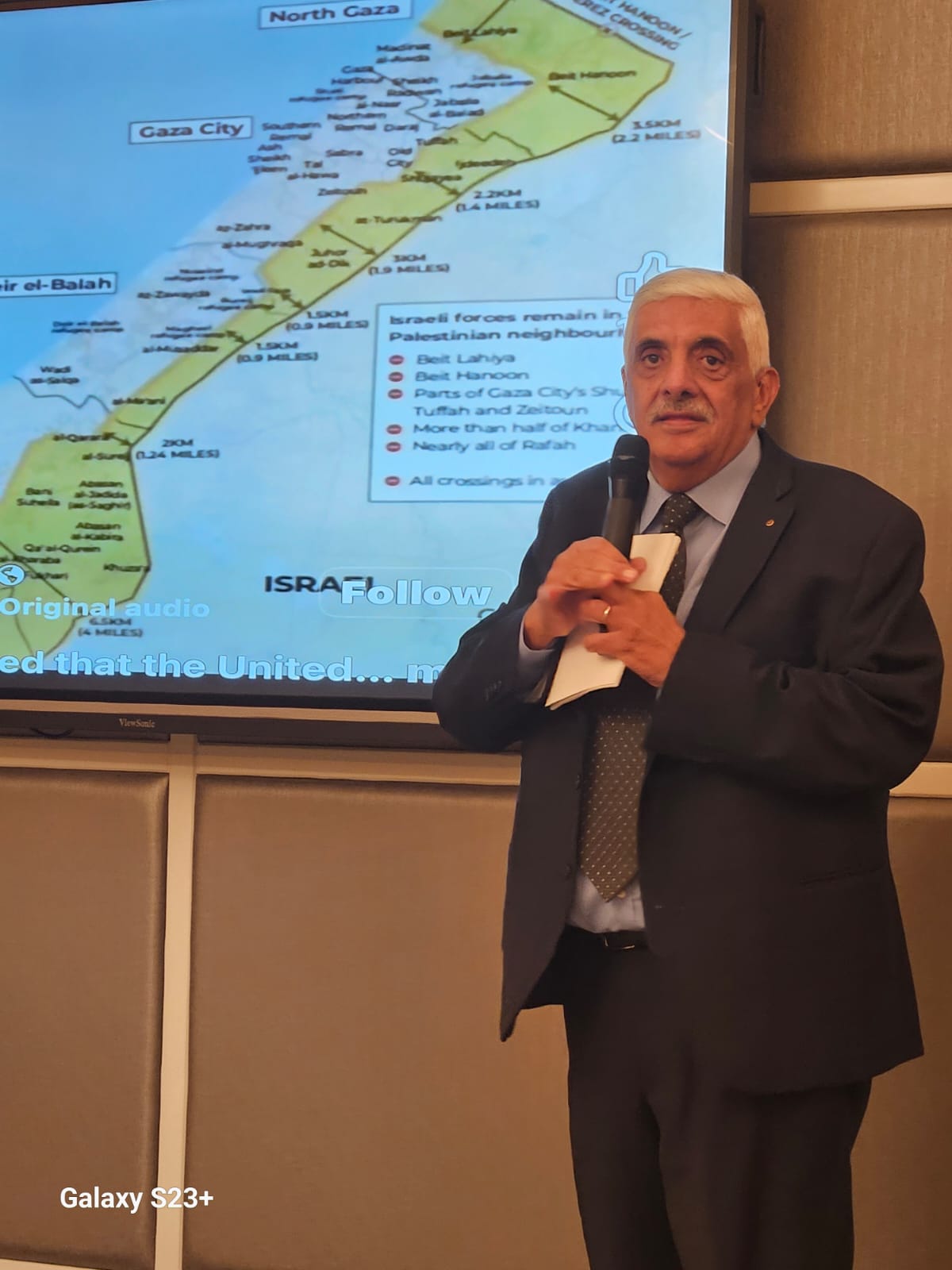
Kuttab spoke at the Rotary Amman Cosmopolitan Club. Wednesday attendees heard a detailed analysis of Gaza’s history, current challenges, and the wider regional geopolitical shifts affecting the Palestinian territories.
He began by tracing the historical evolution of Gaza, which, after the 1956 Suez invasion and subsequent retreat, Israel kept to itself further Palestinian territory. The “Gaza envelope”—areas that were attacked during the Al Aqsa Deluge, became part of Israel and a target of Israeli settlements, were actually part of the Palestinian Gaza between 1948-1956.
The speaker noted that Israel continues to dictate the future of Gaza now, with the approval of the United Nations Security Council. “The current UN resolution allows Israel to maintain control over eastern parts of the tiny Gaza Strip, claiming that they will only withdraw when Israel is satisfied that the entire Gaza Strip has been demilitarized of Palestinian fighters,” Kuttab explained, emphasizing the imbalance of power in the region in favor of the Israeli occupiers.
Nevertheless, Kuttab noted discernible shifts in regional dynamics, including the role of Saudi Arabia’s which insists on a credible path to Palestinian statehood as it also pursues a U.S.-backed defense pact. He also noted rising global support for Palestinians, especially among young people and traditionally pro-Israel communities in the U.S. “Polls now show, for the first time, more Americans supporting Palestinians than Israelis,” he said.
On Jordan’s role, Kuttab noted the country’s marginal involvement in Gaza is due to its lack of direct relations with Hamas and its focus on the West Bank and the custodianship of holy places in Jerusalem, including Al-Aqsa Mosque.
The lecture addressed the complexities of demilitarization, international oversight of reconstruction, and broader Middle East geopolitics, including Syria, Iraq, and Gulf states. Kuttab stressed that while UN resolutions and international diplomacy are crucial, “the daily reality in Gaza is still shaped by violence, poverty, and political uncertainty.”
Kuttab concluded with cautious optimism, noting that despite setbacks, international attention and conditional agreements may provide a pathway, however limited, toward dialogue, reconstruction, and eventually, a credible route toward Palestinian statehood.
To hear the entire lecture https://www.youtube.com/watch?v=syyWvmnSHXs