- أمانة عمّان الكبرى، تنفيذ أعمال تعبيد ليلية في شارع مكة، ضمن منطقة زهران، حي أم أذينة الشرقي، اعتبارا من الساعة 12 منتصف ليلة الأربعاء-الخميس
- وفاة سيدتين وطفل، بحادث دهس، مساء أمس، على الطريق الصحراوي، من قبل مركبة شحن "تريلا"
- قوات حرس الحدود في المنطقة العسكرية الشمالية، تحبط الأربعاء، محاولة تسلل 5 أشخاص عبر إحدى واجهاتها الحدودية، أثناء محاولتهم اجتياز الحدود بصورة غير مشروعة
- مستوطنون، يعتدون الثلاثاء، على خط ناقل للمياه في الرأس الأحمر جنوب شرق طوباس، في الضفة الغربية المحتلة، وفق وكالة الأنباء الفلسطينية "وفا"
- الجيش الأميركي، يقول الثلاثاء، إنه استخدم صواريخ لتعطيل جهاز التوجيه في سفينة شحن ترفع علم بنما، بعد خرقها الحصار البحري المفروض على الموانئ الإيرانية
- يكون الطقس الأربعاء، صيفيا عاديا في أغلب المناطق، وحارا في البادية بينما يكون حارا جدا في الأغوار والبحر الميت والعقبة
Jerash Between Government Promises and Implementation on the Ground: Projects Completed, Others Awaiting Funding and Decisions

08/12/2026 - 12:08
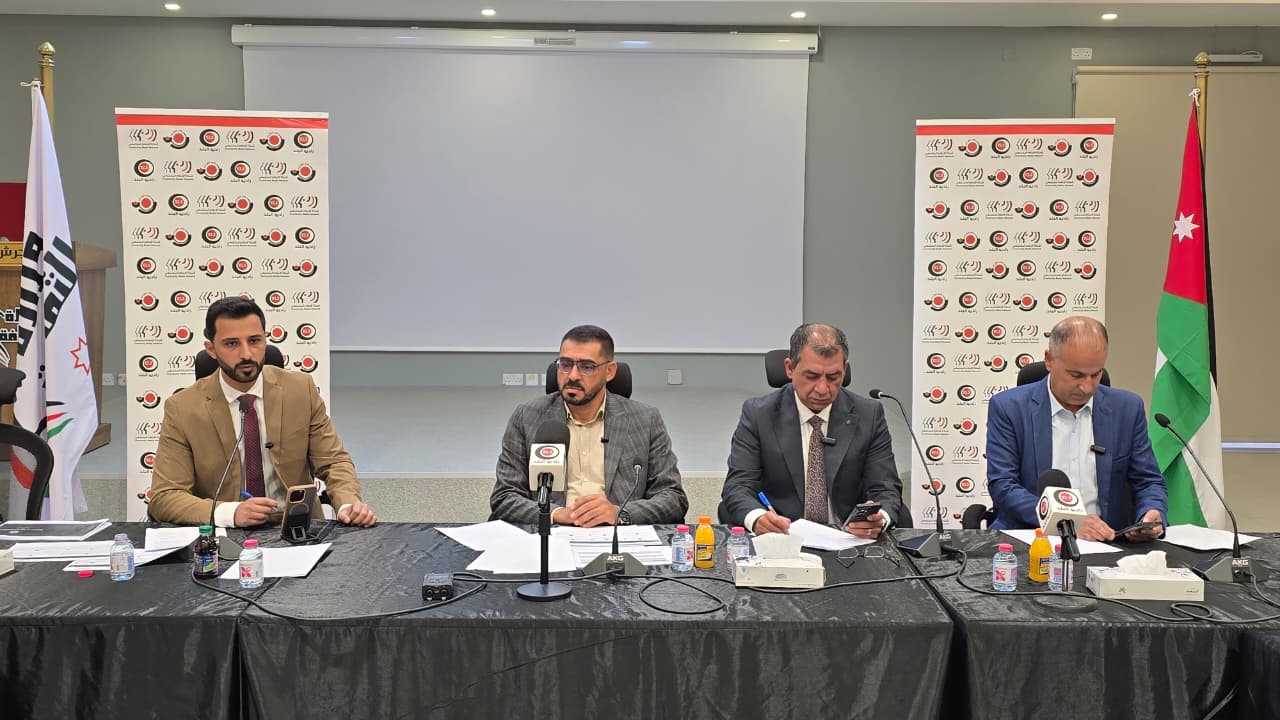
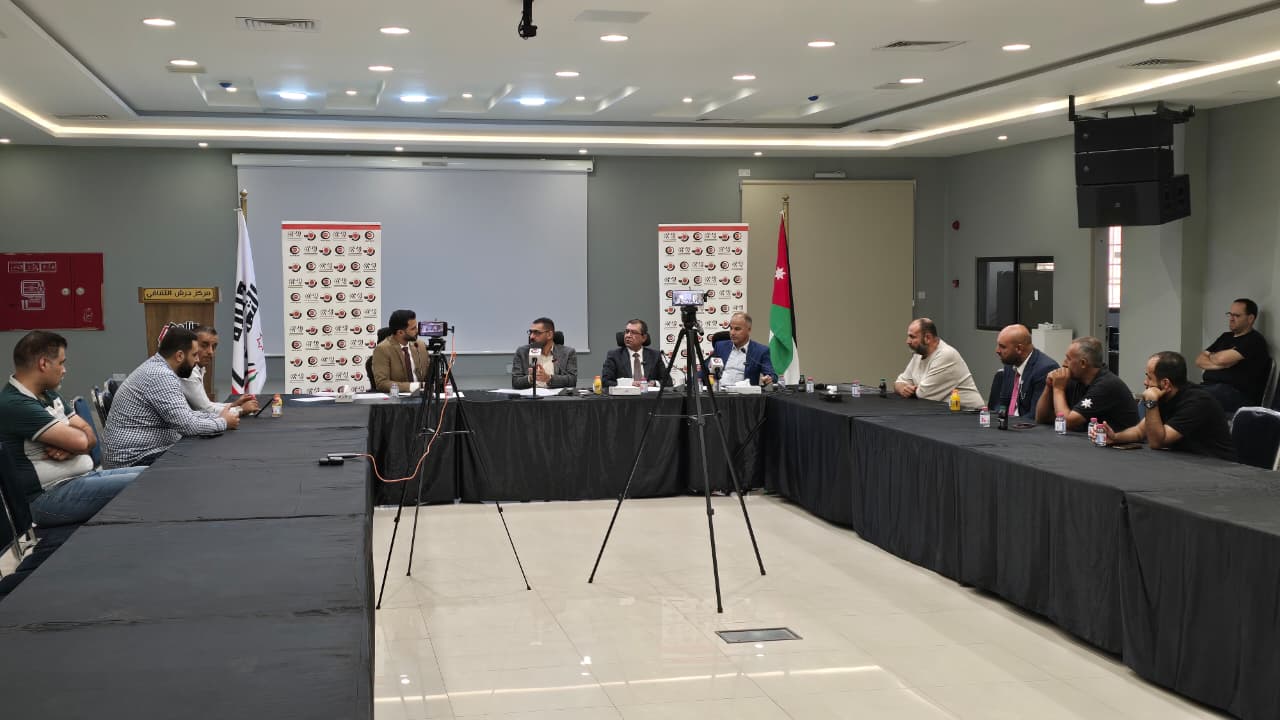
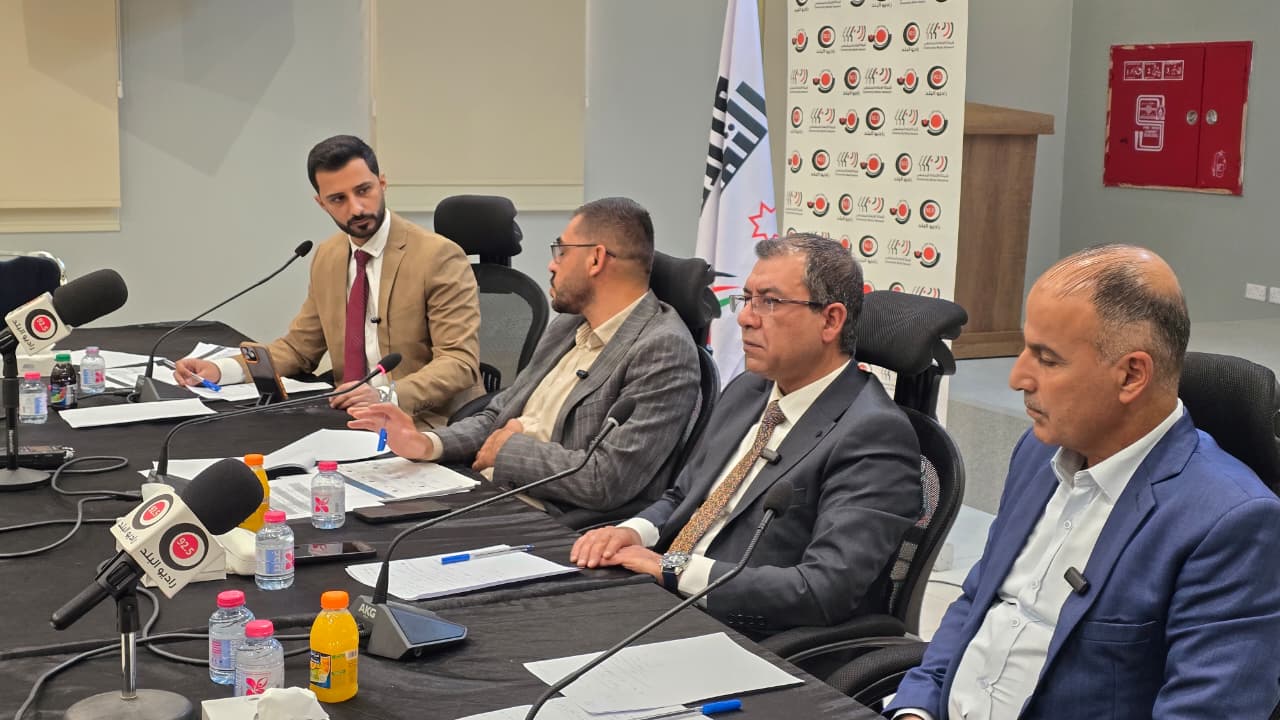
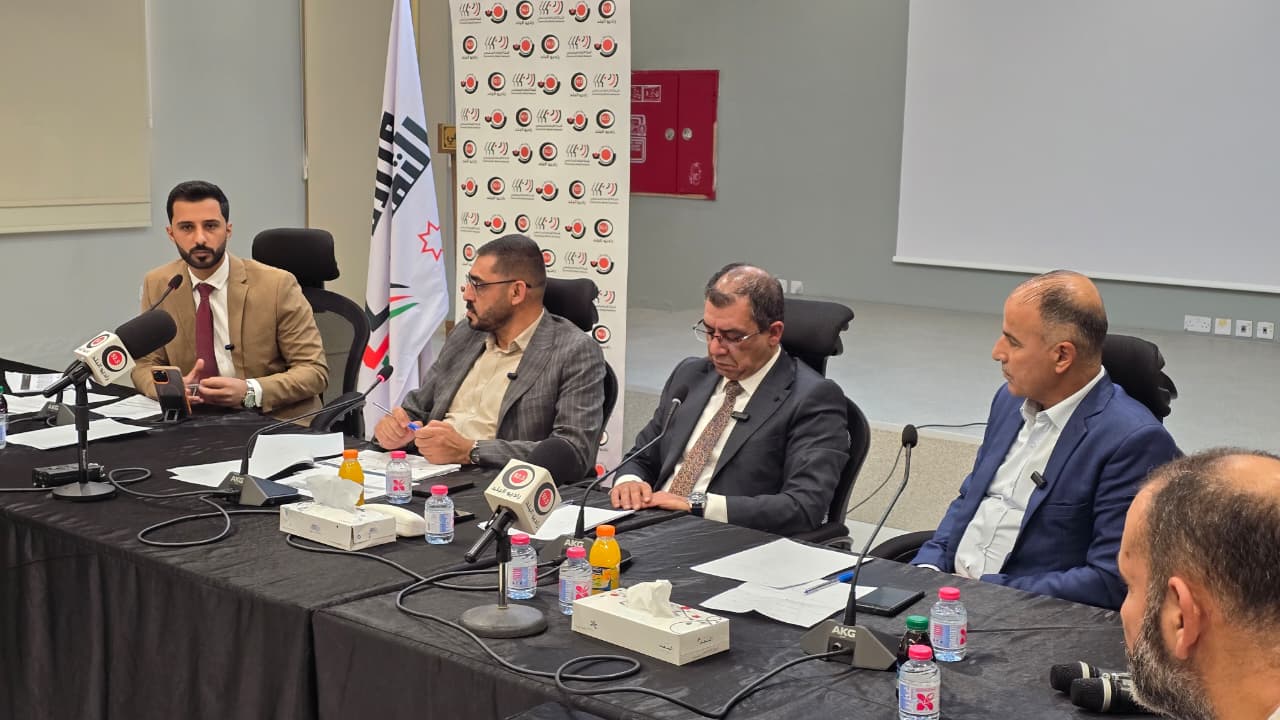
A panel discussion titled “Jerash Governorate Between Government Plans and Reality on the Ground: Assessing Performance and Future Opportunities” revealed significant differences in the pace of implementation of government projects announced during a Cabinet session held in Jerash in July 2025.
The discussion highlighted official and parliamentary confirmations that a number of projects had been completed, while others remained at the stages of studies, implementation, or were awaiting inclusion in future budgets.
The session was part of “Maidani”, a program produced by Radio Al-Balad that follows up on government field visits to Jordanian governorates, monitors what has actually been achieved on the ground, and assesses the implementation of announced projects.
Participants included MP Hamza Al-Hawamdeh, Director of Jerash Health Directorate Dr. Saem Abu Abboud, Director of Jerash Culture Directorate Dr. Aqleh Al-Qadri, as well as a number of residents of the governorate.
The discussion covered health, water, culture, education, local administration, transport, tourism and agriculture, as well as Jerash's future needs, particularly a hospital, transport infrastructure, a university, investment opportunities and jobs.
Al-Hawamdeh: 70 to 80% of the government's 2025 commitments have been completed
MP Hamza Al-Hawamdeh said the Cabinet session in Jerash included, according to his assessment, projects worth around JD 250 million, which were expected to be implemented during the government's term, extending from 2025 to 2029.
He said the projects covered development, public services, infrastructure and efforts to attract investment, stressing that investment requires infrastructure capable of attracting investors.
Al-Hawamdeh noted that implementation rates varied from one project to another. Some projects had been completed, while others were still within their originally scheduled timeframes. Other projects had been postponed, cancelled or transferred from Jerash to other governorates.
He estimated that around 70 to 80% of the government's commitments for 2025 had been fulfilled, whether in infrastructure or other sectors.
At the same time, he stressed that Jerash's needs extend well beyond what has already been delivered, particularly in vital sectors such as health, transport and education.
He noted that spending on education had, in some cases, exceeded the amounts initially allocated, which he considered a positive development. However, he said the governorate still needed additional projects and services.
Jerash needs greater focus on agriculture and tourism
Al-Hawamdeh identified agriculture and tourism as Jerash's two main comparative advantages, arguing that the governorate's environmental and agricultural characteristics mean it cannot be approached in the same way as governorates with major industrial centres.
In his assessment, Jerash is not receiving resources commensurate with its advantages and needs. He called for improvements to capital projects, infrastructure and the relationship with the private sector.
He stressed that public-private partnerships should be part of the response to development challenges, particularly given the government's limited resources.
Speaking about the national budget, Al-Hawamdeh said Jordan's budget is largely dominated by recurrent expenditure. According to his estimate, around 80% of the budget goes toward salaries and incentives, leaving a relatively limited share for operational costs and capital projects.
He said this situation affects the government's ability to implement large-scale capital projects across the governorates.
Water projects moving forward, but shortages remain
Water was a major focus of the discussion, amid what Al-Hawamdeh described as a severe shortage in water supplies to Jerash, despite the fact that Jerash and neighbouring Ajloun are among Jordan's highest-rainfall areas.
He referred to the project to rehabilitate water networks in Al-Mastaba District, scheduled for implementation between 2025 and 2027 at a cost of approximately JD 7 million.
According to Al-Hawamdeh, the project is around 50% complete, with studies, excavation and sections of the network still under implementation.
He said the project is being regularly monitored through field visits and periodic meetings to follow up on Jerash's water allocation and identify projects that could help address shortages.
He also referred to an increase in water pumped from the Mashta Faisal water station. According to figures presented during the discussion, output had increased from approximately 200 cubic metres per hour to between 450 and 500 cubic metres per hour.
He also cited other water and wastewater projects whose combined value, according to his remarks, runs into tens of millions of dinars. These include a JD 32 million project to develop the West Jerash wastewater treatment plant and generate electricity from biogas, in addition to the operation of wastewater treatment plants in West and East Jerash and Kafr Anja.
A programme is also underway to rehabilitate wastewater networks in several areas of Jerash. Al-Hawamdeh estimated the value of wastewater network rehabilitation projects across the governorate at more than JD 50 million.
Health Director: Comprehensive Jerash Health Centre serves around 80,000 people
Jerash Health Director Dr. Saem Abu Abboud said the Ministry of Health had implemented a significant portion of the projects included in its plans for the governorate, while work continued on others.
He pointed to the opening of the Comprehensive Jerash Health Centre in April 2026, saying the facility serves around 80,000 residents in the governorate's main urban area.
The centre has introduced and integrated new health services, including mental health services and a dedicated clinic, while its staffing has been expanded to around 70 employees.
Abu Abboud said the centre had also become fully automated and introduced electronic payment services. It has been connected to the Hakeem electronic health programme, in line with other health centres across the governorate.
He described the centre as a major health facility for Jerash because of the breadth of its services and equipment.
Expansion of Souf Health Centre nearing completion
Regarding the Souf Primary Health Centre, the health director said the facility serves Souf, Al-Burj and Al-Mansoura, with a population of approximately 30,000 beneficiaries.
The centre has been operating for decades, he said, but the Ministry of Health determined that it needed expansion, modernisation and additional services.
The expansion tender was launched, increasing the centre's area from 300 square metres to 550 square metres.
Abu Abboud said the project had reached its final stages, with the contractor currently addressing a number of technical observations.
He expected the project to be handed over shortly, after which the centre would be equipped with the necessary furniture and medical equipment ahead of its official opening.
JD 180,000 budget for Jerash Health Directorate in 2026
Abu Abboud said the 2026 budget of the Jerash Health Directorate stands at JD 180,000, allocated to general and routine maintenance of health centres, as well as the purchase of medical equipment and supplies.
Routine maintenance works were around 70% complete, with approximately JD 35,000 spent so far. He expected both implementation and expenditure to reach 100% by the end of the financial year.
He added that JD 30,000 had been allocated for medical equipment and supplies. The allocated amount had been committed, he said, while the remaining equipment would be delivered over the following four months.
Construction of Al-Mushairfa Health Centre to begin in 2027
Regarding the Al-Mushairfa Health Centre, Abu Abboud said JD 100,000 had been allocated for studies and designs.
A plot of land measuring approximately three dunums and 200 square metres had been acquired for the project.
The tender for the studies and designs has been launched, and the project is procedurally underway. Construction is expected to begin in early 2027, once the necessary funds are allocated and included in that year's budget.
Health Ministry prioritises quality of services over the number of centres
The Jerash health director said the Ministry of Health continuously reviews its plans and needs, with its current approach placing greater emphasis on the quality of healthcare services rather than simply increasing the number of health centres.
Under this approach, he said, one health centre offering integrated services at a good standard is preferable to a larger number of centres providing limited services.
He also referred to other projects in the governorate, including the Muqabla Health Centre, which is being implemented through a donation of land from the Royal Court. He expected the facility to be handed over in the first quarter of 2027.
He also said funds had been allocated to rent a new building for the chest diseases department at the Jerash Health Directorate, in order to provide the department with a more suitable location.
Al-Hadada and Al-Rashaida health centres were also among the facilities reviewed, he said. The Ministry of Health had allocated funds to rent locations to enable their reopening, with procedures still underway.
Culture Director: Jerash Cultural Centre was a dream dating back to 2008
Jerash Culture Director Dr. Aqleh Al-Qadri said the Jerash Cultural Centre was one of the governorate's most prominent completed projects, noting that the idea of establishing the centre dates back to 2008.
The project went through several stages over the years. Tenders, plans and studies were launched in 2018, followed by construction, until the centre was finally completed and officially opened on December 7, 2025, under the patronage of Prime Minister Jafar Hassan.
The centre includes several halls and facilities, including an arts institute, and serves as a hub for cultural programmes and local civil society organisations.
Al-Qadri said the centre had also created employment opportunities, with the number of workers in security, services and outsourced positions increasing compared with the previous staffing levels at the Culture Directorate.
The centre will host programmes organised by 28 cultural associations affiliated with the Culture Directorate, in addition to activities organised by the directorate and governorate and programmes brought in from outside Jerash.
Al-Maarad Cultural District project fully completed
Al-Qadri said the Al-Maarad Cultural District project, launched at the beginning of 2025, had been fully completed according to its planned schedule.
Approximately JD 73,000 had initially been allocated to the project, but the amount was insufficient to cover all planned programmes, prompting additional support from the Ministry of Culture.
The activities included cultural programmes, seminars, conferences, poetry evenings and a range of artistic and cultural events.
He also discussed support for cultural organisations in the governorate, explaining that they receive annual funding to help meet their obligations, in addition to support for the programmes and projects they organise.
In 2025, JD 25,000 was allocated to cultural organisations through annual support and funding for programmes and activities. A further JD 30,000 was allocated under the directorate's plan for other projects and programmes.
Culture Directorate: Projects completed at 100%
Al-Qadri said the Culture Directorate operates according to an annual plan running from the beginning of the year through the end of the financial year, with implementation and spending rates for projects included in its budget reaching 100% of the available allocations.
He explained that part of the directorate's budget comes through allocations from the Governorate Council, while several competing priorities require the available funds to be distributed among them.
He confirmed that the infrastructure of the Jerash Cultural Centre had been completed and that the facility had been furnished and equipped according to the approved plans.
Arts Institute and Jordanian narrative projects
Looking ahead, Al-Qadri highlighted the Arts Institute as an important project for residents of the governorate.
Previously, he said, people interested in taking artistic courses had to travel to Amman.
The institute includes equipped classrooms and facilities for music, visual arts, Arabic calligraphy, ceramics and sculpture.
He also discussed work on projects related to what he described as the “Jordanian narrative”, aimed at documenting the Kingdom's historical and cultural heritage.
One of the proposed initiatives involves documenting old traditional houses in Jerash and incorporating them into the broader project.
Education spending exceeds allocations in some projects
In reviewing projects across other sectors, MP Al-Hawamdeh said spending in the education sector had, according to his monitoring, exceeded the amounts originally allocated for some projects.
He said some projects had initially been allocated around JD 6 million, while actual implementation costs rose to approximately JD 12 million for school construction projects.
Among the projects he cited were Al-Farwan Mixed Basic School in Sakib, Nahla, Aisrah, Al-Mastaba Secondary School and Ali Bin Abi Talib School.
He also noted the contribution of the Royal Court to several school projects, particularly in the Al-Maarad District.
Despite praising the level of implementation of education projects in Jerash, he said the governorate continued to suffer from a shortage of teachers and called for the issue to be addressed.
Social development projects and assistance
Al-Hawamdeh said social development programmes had fulfilled a large part of their 2025 commitments, referring in particular to programmes operated through the National Aid Fund, whose value reached approximately JD 7 million.
He also referred to cash and in-kind assistance worth, according to his remarks, more than JD 750,000, in addition to direct assistance provided by the Royal Court.
The Ministry of Social Development had also implemented capital projects, including housing for families and the Al-Maarad Integrated Day Centre, which cost approximately JD 170,000, as well as the expansion of the Jerash Care and Rehabilitation Centre for people with disabilities.
Al-Hawamdeh called for greater attention to development projects targeting people with disabilities, arguing for a gradual shift from a welfare-based approach toward development-oriented programmes that help beneficiaries become more self-reliant.
Transport requires greater funding
In the transport sector, Al-Hawamdeh said around JD 13 million had been allocated for projects covering the period from 2025 to 2027.
However, he considered this far below Jerash's actual needs.
According to his assessment, the governorate requires around JD 50 million to JD 60 million for transport and related infrastructure.
He added that the transport problem was not unique to Jerash but affected Jordan more broadly, pointing to the absence of a transport network capable of meeting residents' needs across the governorate.
Tourism project 60% complete
In the tourism sector, Al-Hawamdeh referred to a tourism facility planned at the former industrial city site, incorporating several tourism components.
He said the project was approximately 60% complete, with implementation continuing through 2027.
He also discussed a project to rehabilitate the archaeological site in Jerash to improve accessibility for people with disabilities. According to his remarks, around JD 1.4 million had been allocated to the project.
Al-Hawamdeh expressed concern about the pace of implementation, estimating that only around one-third of the project had been completed, despite the project originally being scheduled for completion in 2026.
He called for closer monitoring, particularly because the project is intended to improve access to the archaeological site for people with disabilities.
Agricultural laboratory project raises questions
In the agriculture sector, Al-Hawamdeh referred to programmes implemented in cooperation with donors and international institutions, including agricultural lending, women's empowerment and water harvesting initiatives.
He said an agricultural lending programme with an allocation of around JD 2.2 million had not been fully implemented in 2025, with a commitment to carry the funds over into 2026.
A women's empowerment programme had also been allocated JD 130,000, but was not fully implemented.
The project that raised greater questions, according to Al-Hawamdeh, was the establishment of a plant tissue culture laboratory, costing JD 500,000.
He said he had received information indicating that the project had been removed from Jerash's allocations.
There were conflicting accounts among the relevant authorities regarding the project's fate, he said, calling for clarification over why it had not been implemented.
Criticism of the budget allocation mechanism
Al-Hawamdeh linked some of the delays and failures in project implementation to the structure of the national budget and the way allocations are distributed.
He also pointed to the lack of mechanisms allowing unused allocations to be rolled over between years, as well as delays in the start of Governorate Council operations after the budget has already been approved.
Governorate councils operate within a limited timeframe, he said, leaving them with less time to implement projects.
He also noted that some projects undergo changes in their allocations, resulting in discrepancies between the amounts initially approved and the amounts ultimately spent.
Al-Hawamdeh called for a review of the distribution of development projects among governorates and for a clear priority system based on each governorate's needs and comparative advantages.
Residents call for greater involvement of Jerash residents in Jerash Festival
During the session, several residents called for greater involvement of people from Jerash in the economic and cultural activities associated with the Jerash Festival.
One participant said around 1,500 residents of the governorate had traditionally participated in the festival each year, calling for their involvement to be expanded in organising events and related activities, including commercial and service-related work.
Al-Hawamdeh responded by stressing that his role as an MP is focused on legislation, oversight of budgets and public policies, rather than the direct management of the festival.
He explained that the Jerash Festival falls under the Ministry of Culture and the Culture Directorate, while MPs can exercise their role through the budget process and by monitoring the performance of the minister and relevant government bodies.
Jerash calls for a model hospital
Looking at the governorate's priorities for the next phase, Al-Hawamdeh placed the establishment of a model hospital at the top of Jerash's demands.
He said the governorate needs a hospital above all else, noting that the issue was being followed up and that there was serious interest in conducting the necessary studies.
He suggested using a public-private partnership model that could allow the hospital to be built without requiring the government to shoulder the entire construction cost.
Calls for a public university in Jerash
Al-Hawamdeh also identified the establishment of a public university in Jerash as one of the governorate's key priorities.
He said Jerash's population is approaching 300,000, and argued that the presence of a single college does not adequately address the governorate's higher education needs.
Jerash needs a fully fledged public university, he said, alongside measures to address transport problems that affect residents' and students' ability to access educational services.
Calls to reconsider the closure of some health centres
The session also included interventions from residents regarding local health centres.
One participant called for a review of the situation of several centres that had been closed, while another raised the issue of the transfer of a dental chair from Kafr Khall Health Centre.
The Jerash health director explained that Kafr Khall Health Centre serves between 18,000 and 20,000 people and has one dental clinic.
The arrival of a new dental chair resulted in an additional piece of equipment being available, but there was no second clinic to accommodate it, he said.
The chair was therefore transferred to Al-Mushairfa Health Centre so that it could be used rather than remain in storage.
He stressed that the aim was to distribute medical equipment among health centres according to actual needs.
Review of the status of Deir Illiyat Health Centre
Regarding Deir Illiyat Health Centre, Abu Abboud said the decision to close the facility had been based on reports by technical committees, including an assessment of the condition of the building and the distance between the centre and Souf Health Centre.
He said the existing building was in poor condition and that extensive maintenance might not be worthwhile.
However, the issue is now being reconsidered following demands from local residents to keep the centre open.
The final decision, he said, rests with the Minister of Health after consultation with the relevant departments.
Al-Hawamdeh, meanwhile, said some health centres that had been closed were subsequently reopened following reviews of the decisions.
He noted that the geographical characteristics of some areas in Jerash make the presence of a health centre necessary even when the distance between it and another centre is shorter than the officially adopted standards.
Culture Director: We want stronger partnerships with cultural organisations
At the conclusion of the discussion, Jerash Culture Director Aqleh Al-Qadri called on cultural organisations and the local community to strengthen their partnership with the Culture Directorate.
He said some organisations already have strong and effective partnerships with the directorate, while others need to improve their level of cooperation.
He also urged local residents to visit the Jerash Cultural Centre and make use of its programmes and activities, stressing that the centre is now fully equipped to host a wide range of cultural events.
The session concluded with an emphasis on the importance of continuing field monitoring of government projects rather than stopping at the announcement stage.
Participants stressed the need to measure the actual impact of projects on people's lives, particularly in health, water, education, transport, tourism and employment.
The discussion showed that Jerash has made tangible progress on a number of projects, including the Jerash Cultural Centre, the Comprehensive Jerash Health Centre, the expansion of Souf Health Centre, and projects in education and water.
Other files, however, remain tied to studies, funding or future budgets.
Representatives of the governorate argue that the next phase should focus on establishing a model hospital and a public university, improving the transport network, and strengthening investment and development projects capable of building on Jerash's agricultural and tourism potential.