- أمانة عمّان الكبرى، تقر تعليمات حظر بيع وتداول المنتجات البستانية خارج سوق عمّان المركزي للخضار والفواكه والمنصة الإلكترونية المعتمدة من الأمانة
- فترة تقديم طلبات القبول الموحد للدورة العامة/ الصيفية 2026-2027 لمرحلة البكالوريوس تنتهي عند الساعة 12 من منتصف ليلة الخميس/ الجمعة
- المنطقة العسكرية الجنوبية، تحبط الأربعاء، عملية تهريب كمية كبيرة من المواد المخدرة، بعد رصد بالون موجّه محمّل بالمخدرات، كان في طريقه إلى الأراضي الأردنية
- مستوطنون، يواصلون الخميس، لليوم الثاني عشر على التوالي، محاصرة عدد من المنازل في بلدة قصرة، جنوب نابلس، وسط حماية من جيش الاحتلال الإسرائيلي
- الرئيس الأميركي دونالد ترامب، يهدد بتحميل "أي دولة" تساعد إيران أو تتعامل معها تجاريّا تبعات اقتصادية "وخيمة"
- تتأثر المملكة، الخميس، بكتلة هوائية حارة ويكون الطقس حارا نسبيا في أغلب المناطق، وحارا جدا في البادية والأغوار والبحر الميت والعقبة
Al-Sharaa to Jordan: We Will Share Syria’s Water with the Kingdom
04/13/2026 - 10:27
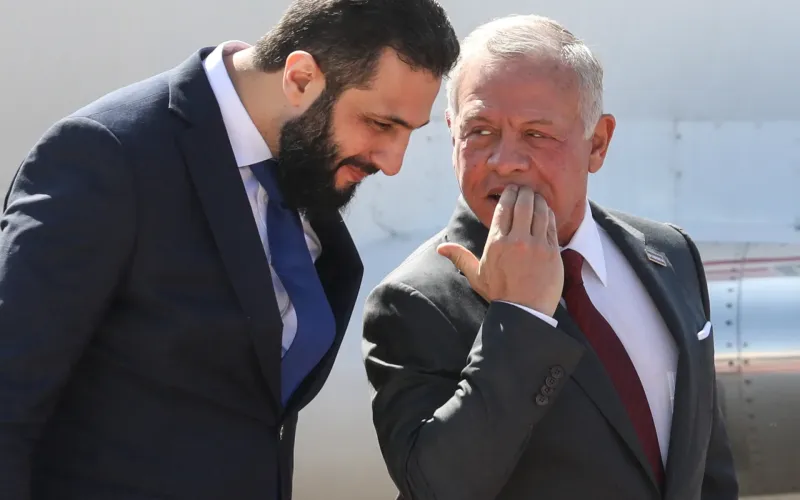
A Syrian official revealed on Sunday that President Ahmad Al-Sharaa has sent a message to Jordan affirming that Syria’s water resources will be shared with the Kingdom.
The statement was made by Mohammed Al-Ahmad, Director of the Arab Affairs Department at the Syrian Ministry of Foreign Affairs, in remarks to Jordan’s Al-Mamlaka TV, following Amman’s hosting of the second session of the Higher Coordination Council between the two countries.
Around 10 agreements and memoranda of understanding were signed across several sectors, including energy and water, in what Jordan’s Foreign Minister Ayman Safadi described as the “largest meeting” between the two sides, during a joint press conference with his Syrian counterpart Asaad Al-Shaibani.
Al-Ahmad noted that “Syria has made significant progress in joint coordination with Jordan,” adding that the participation of more than 30 ministers in the council’s second session reflects a notable diplomatic breakthrough between the two countries. He also stressed that the agreements signed would enhance economic integration.
According to Al-Ahmad, President Al-Sharaa tasked Al-Shaibani with delivering a message stating that “Syria’s water will be shared with Jordan,” without clarifying whether the message was written or verbal, or to whom it was formally addressed.
He added that “substantial progress has been made in the water file with Jordan, which is moving in the right direction at an accelerated pace.”
Regarding water resources in the Yarmouk Basin, Al-Ahmad said that illegal well drilling has been halted on both sides of the border.
On July 8, the Jordanian-Syrian Joint Technical Committee held its first meeting in the area of Al-Wehda Dam along the shared border. The two sides agreed to develop the Yarmouk River basin, implement joint projects, and introduce remote monitoring and control of water resources, according to Jordan’s Petra News Agency.
The Yarmouk River is one of Jordan’s main tributaries, stretching 57 kilometers, 47 of which lie within Syrian territory, while the remainder runs through Jordan. It originates from Lake Muzayrib in the southern Syrian city of Daraa, before flowing along part of the Syrian-Jordanian border. The river is also fed by tributaries such as Wadi Al-Ruqad in the occupied Syrian Golan.
During the era of the former Syrian regime, disputes emerged with Jordan over water flows from the Yarmouk Basin. Damascus was accused of violating agreed allocations under the 1957 agreement, amended in 1987.
These violations included the construction of around 50 dams and reservoirs along the river’s tributaries, despite the agreement allowing only 27, in addition to the drilling of nearly 10,000 wells in the basin.