- أمانة عمّان الكبرى، تقر تعليمات حظر بيع وتداول المنتجات البستانية خارج سوق عمّان المركزي للخضار والفواكه والمنصة الإلكترونية المعتمدة من الأمانة
- فترة تقديم طلبات القبول الموحد للدورة العامة/ الصيفية 2026-2027 لمرحلة البكالوريوس تنتهي عند الساعة 12 من منتصف ليلة الخميس/ الجمعة
- المنطقة العسكرية الجنوبية، تحبط الأربعاء، عملية تهريب كمية كبيرة من المواد المخدرة، بعد رصد بالون موجّه محمّل بالمخدرات، كان في طريقه إلى الأراضي الأردنية
- مستوطنون، يواصلون الخميس، لليوم الثاني عشر على التوالي، محاصرة عدد من المنازل في بلدة قصرة، جنوب نابلس، وسط حماية من جيش الاحتلال الإسرائيلي
- الرئيس الأميركي دونالد ترامب، يهدد بتحميل "أي دولة" تساعد إيران أو تتعامل معها تجاريّا تبعات اقتصادية "وخيمة"
- تتأثر المملكة، الخميس، بكتلة هوائية حارة ويكون الطقس حارا نسبيا في أغلب المناطق، وحارا جدا في البادية والأغوار والبحر الميت والعقبة
What Are the Scenarios of an Iran–U.S.–Israel War?
03/08/2026 - 11:47
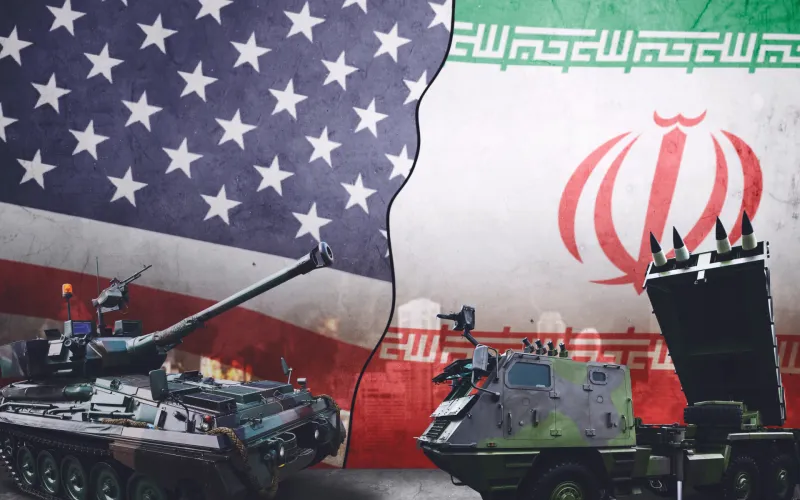
The Middle East in 2026 is witnessing an unprecedented military escalation, as a comprehensive confrontation has erupted between the United States and Israel on one side and Iran on the other. This war, which began with intensive airstrikes and the targeting of senior leadership figures, represents a decisive turning point in the geopolitical landscape and is marked by major strategic and economic complexities.
Multiple possible scenarios for this conflict are unfolding, ranging from a prolonged war of attrition to broad regional escalation, with enormous international repercussions.
Introduction to the Dynamics of the Ongoing Conflict
The military confrontation between the United States, Israel, and Iran in 2026 represents the culmination of years of rising tensions in the region. This new phase of conflict began with a sudden and coordinated attack targeting the heart of Iran’s military and political infrastructure.
This escalation indicates a significant shift in the strategies of the actors involved and raises serious questions about the future of regional and global stability.
This report reviews the possible scenarios of this war based on an in-depth analysis of available information and official statements from the concerned parties, focusing on the military, economic, and political dimensions of the conflict.
The First Strike: Operation “Urgent Lightning”
At dawn on Saturday, March 4, 2026, a U.S.–Israeli coalition launched a large-scale attack on Iranian territory. The strikes, called “Urgent Lightning,” targeted a number of strategic and vital sites inside Iran.
These targets included major military sites, nuclear facilities, and security headquarters in Tehran and other cities such as Shiraz. One of the immediate outcomes of the strikes was the death of Iran’s Supreme Leader, along with several prominent security and military commanders.
Reports revealed that the attack involved Israeli aircraft dropping 30 bombs on a residential complex in Tehran, causing massive explosions and plumes of smoke rising from the presidential palace and security headquarters.
According to statements by U.S. President Donald Trump, the declared objective of the operation was to destroy Iran’s ballistic and naval missile capabilities, prevent the development of nuclear weapons, and stop Iran’s support for regional proxy groups.
The Iranian Response: “Comprehensive Revenge”
Iran did not delay its response to the attacks. It launched a barrage of ballistic missiles and drones toward Israel and U.S. bases across the region.
These attacks also targeted economic facilities in Gulf countries, including the Manama base in Bahrain. Dozens of casualties were reported on the Iranian side, with Iran accusing the coalition of targeting civilians.
Iran confirmed its readiness to continue the war for up to two years, pointing to its military and missile capabilities as tools to exhaust its adversaries and inflict continuous losses.
Military deployments increased in the Strait of Hormuz, and maritime traffic declined, indicating the potential expansion of the conflict. The United States evacuated its citizens from the region in anticipation of further escalation, reflecting fears of a prolonged war.
Possible Conflict Scenarios
Several possible scenarios could emerge from this war, each carrying different consequences for the region and the world. These scenarios can be categorized based on the level of escalation, the scope of targets, and the economic and geopolitical impacts.
Scenario 1: A Long-Term War of Attrition
Dynamics of Mutual Exhaustion
This scenario is considered the most likely. Iran may attempt to turn the conflict into a prolonged war of attrition aimed at exhausting the capabilities of the United States and Israel.
This strategy relies on Iran’s advanced missile capabilities and its network of regional allies. Iran believes its ability to create instability inside Israel—despite the geographic distance—is a decisive factor in the attrition equation.
This scenario would likely involve continuous reciprocal attacks:
- Iran targeting U.S. bases in the region and Israeli cities.
- The U.S.–Israeli coalition focusing on destroying the remaining Iranian missile and military infrastructure.
President Trump also announced what he called “the day after” in Iran, suggesting the possibility of seeking regime change or internal collapse within Iran.
Disruption of Navigation in the Strait of Hormuz
The Strait of Hormuz is a vital chokepoint for global oil trade. In an attrition scenario, Iran could use its naval and missile capabilities to disrupt navigation in the strait.
Such disruption would have severe global economic consequences. Western powers would attempt to strengthen their naval presence to ensure freedom of navigation, but any disruption would significantly affect energy prices and the global economy.
Scenario 2: Limited and Rapid War
Focused Strike and Intense Response
This scenario involves a concentrated military strike on key Iranian sites aimed at achieving specific objectives quickly, such as destroying nuclear or missile capabilities.
Iran’s response would be intense but geographically limited, using ballistic missiles and drones targeting Israel and sites in the Gulf.
This phase might be relatively short but would not necessarily end the conflict entirely.
The strikes in this scenario aim to eliminate Iran’s missile strength, including its ballistic and naval missiles, and destroy its ability to develop nuclear weapons.
Several Iranian warships were reportedly destroyed and major bases in the Gulf of Oman targeted during the initial attacks, indicating the nature of these focused strikes.
Scenario 3: Comprehensive Regional Escalation
Expansion of the Conflict
In this scenario, the conflict spreads to other countries in the region.
Iran might launch attacks on targets in Syria, Jordan, and other Gulf states, pushing these countries to become more directly involved in the conflict.
This scenario could lead to a full-scale regional war, with the intervention of additional international powers and deep geopolitical consequences.
The objective of the attacks could go beyond previous declarations toward a broader campaign aimed at undermining Iran’s leadership and centers of power in order to overthrow the ruling regime.
Such goals could fuel regional escalation as Iran and its allies seek to counter these efforts.
The Economic and Human Costs of the War
The impact of the war extends beyond the military sphere to include enormous economic and human costs for both the participating parties and the global economy.
Financial Burden on the United States
The financial cost of the war to American taxpayers is estimated at more than $890 million per day.
Spending exceeded $1.5 billion in the first 100 hours of the conflict alone, including logistical support and airstrikes.
These figures indicate a massive financial burden on the United States and could influence decisions by American leadership regarding the continuation of the conflict.
Impact on the Global Economy
One of the most important economic consequences of the war is the rise in energy prices and disruption of global markets.
Any disruption to navigation in the Strait of Hormuz would directly affect global oil and gas supplies, raising prices and increasing inflationary pressures.
Global supply chains would also be affected, potentially slowing worldwide economic growth.
The high cost figures reported by various media outlets show that the war would not only impact the budgets of participating countries but would also place pressure on all global economies—especially those dependent on energy imports from the Middle East.
Triggering Factors and Operational Indicators
The course of the war may be influenced by several triggers and operational indicators that could change the dynamics of the conflict.
Understanding these factors is essential for anticipating future developments.
Speed and Scope of the Iranian Response
The speed and scale of Iran’s response could significantly alter the trajectory of the war.
If Iran manages to launch wide and effective attacks, escalation could become faster and more violent.
If the response is limited, the conflict may lean toward a longer war of attrition.
Degree of Economic Exhaustion
The enormous economic costs will be a major pressure factor on the participating parties.
If costs exceed acceptable limits, the sides may be forced to reconsider their strategies and seek diplomatic solutions.
The daily spending figures borne by the United States are an important indicator of this economic strain.
Gulf Support and Military Presence
The level of support provided by Gulf states to the U.S.–Israeli coalition, as well as the presence of American forces in the region, will directly affect the course of the war.
The distribution of military targets and logistical operations across the region plays a crucial role in determining the effectiveness of military operations.
Protection of Maritime Supply Lines
The ability to protect maritime supply lines—especially through the Strait of Hormuz—remains a key factor.
Any threat to navigation in the strait would directly affect the global economy and create new challenges for the coalition.
The War’s Impact on the Region and the World
The war between Iran and the U.S.–Israeli coalition has far-reaching consequences that go beyond the region, affecting global stability and the international economy.
Geopolitical Effects
The war could reshape regional and international alliances.
Tensions between major powers could increase, and the political maps of some countries might change.
Attempts to overthrow the Iranian regime, as some reports suggest, could lead to a power vacuum or internal conflict, increasing instability.
There may also be a significant impact on the ability of the parties to sustain a long-term conflict, potentially opening the door to diplomatic shifts and a reassessment of the presence of foreign nationals and the role of allies in the region.
Humanitarian and Social Effects
In addition to direct human casualties, the war is likely to produce widespread humanitarian crises, including population displacement, destruction of civilian infrastructure, and shortages of food and medicine.
Local communities would be severely affected, and reconstruction could take many years at enormous cost.
The Iran–U.S.–Israel war in 2026 represents a dangerous phase in the history of the Middle East, with far-reaching consequences for regional and international stability.
The possible scenarios range from a prolonged war of attrition to comprehensive regional escalation, all of which carry enormous military, economic, and human costs.
Monitoring developments in this complex conflict will be crucial to understanding the trajectory of events and their future impact on the world.