- أمانة عمّان الكبرى، تقر تعليمات حظر بيع وتداول المنتجات البستانية خارج سوق عمّان المركزي للخضار والفواكه والمنصة الإلكترونية المعتمدة من الأمانة
- فترة تقديم طلبات القبول الموحد للدورة العامة/ الصيفية 2026-2027 لمرحلة البكالوريوس تنتهي عند الساعة 12 من منتصف ليلة الخميس/ الجمعة
- المنطقة العسكرية الجنوبية، تحبط الأربعاء، عملية تهريب كمية كبيرة من المواد المخدرة، بعد رصد بالون موجّه محمّل بالمخدرات، كان في طريقه إلى الأراضي الأردنية
- مستوطنون، يواصلون الخميس، لليوم الثاني عشر على التوالي، محاصرة عدد من المنازل في بلدة قصرة، جنوب نابلس، وسط حماية من جيش الاحتلال الإسرائيلي
- الرئيس الأميركي دونالد ترامب، يهدد بتحميل "أي دولة" تساعد إيران أو تتعامل معها تجاريّا تبعات اقتصادية "وخيمة"
- تتأثر المملكة، الخميس، بكتلة هوائية حارة ويكون الطقس حارا نسبيا في أغلب المناطق، وحارا جدا في البادية والأغوار والبحر الميت والعقبة
The Plight of Palestinian Christians: A Silent War and Growing Challenges Under Occupation

03/30/2026 - 11:24
Palestinian Christians in the occupied territories, particularly in Jerusalem, the West Bank, and the Gaza Strip, are facing increasing pressures and systematic restrictions imposed by the Israeli occupation. These policies, described in numerous reports as a “silent war,” aim to undermine their historical and demographic presence, directly affecting their religious freedom, fundamental rights, and the future of their communities.
Human rights reports reflect an organized pattern of violations targeting individuals and Christian holy sites, imposing restrictions on daily life and education. The most recent example is the Israeli authorities’ prevention of the Latin Patriarch of Jerusalem from entering the Church of the Holy Sepulchre to celebrate Palm Sunday Mass.
Repeated Attacks on Christian Holy Sites and Individuals
Attacks on churches, monasteries, and Christian cemeteries are a recurring phenomenon in the occupied Palestinian territories and have escalated noticeably in recent years. These assaults include not only property desecration but also physical attacks on clergy and worshippers.
Reports indicate that churches in Jerusalem were subjected to around 40 violent attacks over just two months in 2025. These included desecration of cemeteries, assaults on priests, and break-ins. Churches and monasteries were also targeted with stones, bottles, and trash, and anti-Christian slogans were painted on walls. Some reports suggest that extremists carry out these attacks with Israeli authorities either tolerating them or carrying out symbolic arrests that do not deter further violations.
Christians in Jerusalem Observe Good Friday
Christians in Jerusalem commemorated Good Friday under heavily restricted conditions.
Settler and Israeli Forces Attacks
The Higher Presidential Committee for Church Affairs documented a series of attacks by settlers and Israeli forces. Notable incidents in 2026 included an armed attack on the town of Taybeh near Ramallah, assaults in Birzeit, attacks on the St. James Monastery in Jerusalem, and incidents of arson and vandalism in Taybeh. These events indicate a persistent pattern of deliberate targeting of Christians and their holy sites, reinforcing the perception of a systematic campaign against the Christian presence in Palestine.
Restrictions on Religious Freedom and Movement
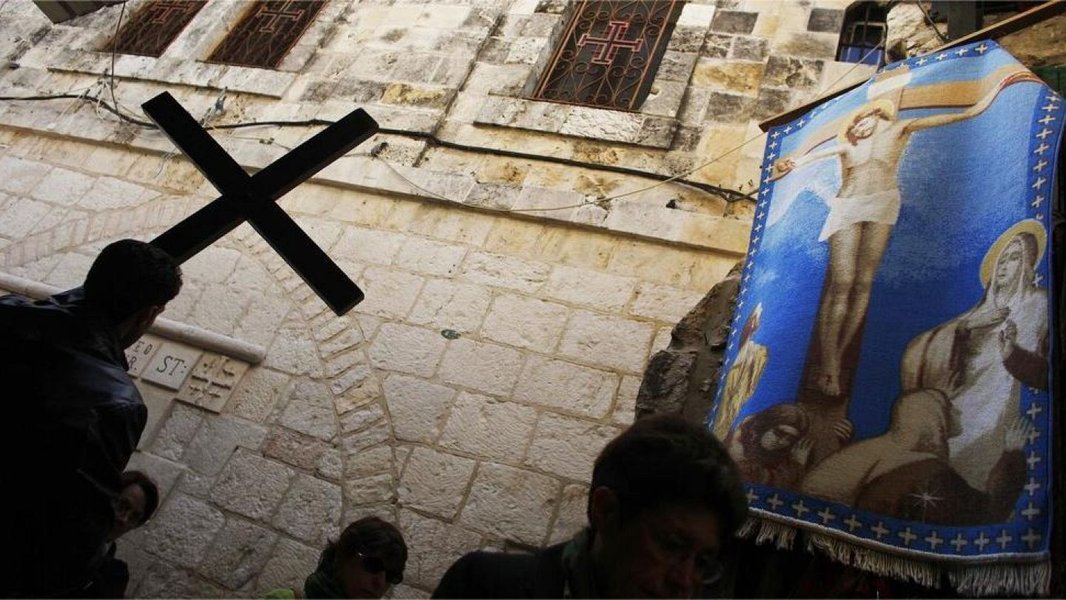
In addition to direct attacks, Palestinian Christians face severe restrictions on practicing their religious rituals and their right to move freely, especially to holy sites.
Christians in Jerusalem, the West Bank, and Gaza experience limitations on mobility, making it difficult to visit family or participate in religious and social events. These restrictions isolate Christian communities, hindering social and cultural cohesion.
During major religious occasions such as Holy Saturday, strict limits were imposed on the number of participants in celebrations, restricting worshippers. In 2026, an “unprecedented” ban was imposed on Palm Sunday Mass in Jerusalem, justified under “security reasons,” described as “historically unprecedented.” These measures prevent Christians from freely practicing their rituals and accessing churches and monasteries.
Economic and Educational Pressures Affecting Christian Presence
Economic pressures and restrictions on education are effective tools in diminishing the Christian presence in Palestine, pushing many to emigrate.
High taxes, such as the “Arnona,” are levied on churches and Christian institutions, creating a heavy financial burden that threatens their continuity. These policies aim to weaken the financial capacity of Christian communities and undermine their independence.
Threats to Christian Educational Institutions
The Middle East Council of Churches’ 2026 reports highlight growing concerns over the decline of Christians in Jerusalem due to economic and educational restrictions. The shortage of Christian teachers in Jerusalem is one of the major challenges threatening the preservation of Christian identity and educational institutions. These educational constraints aim to weaken young generations’ cultural and religious connection to their Palestinian Christian identity.
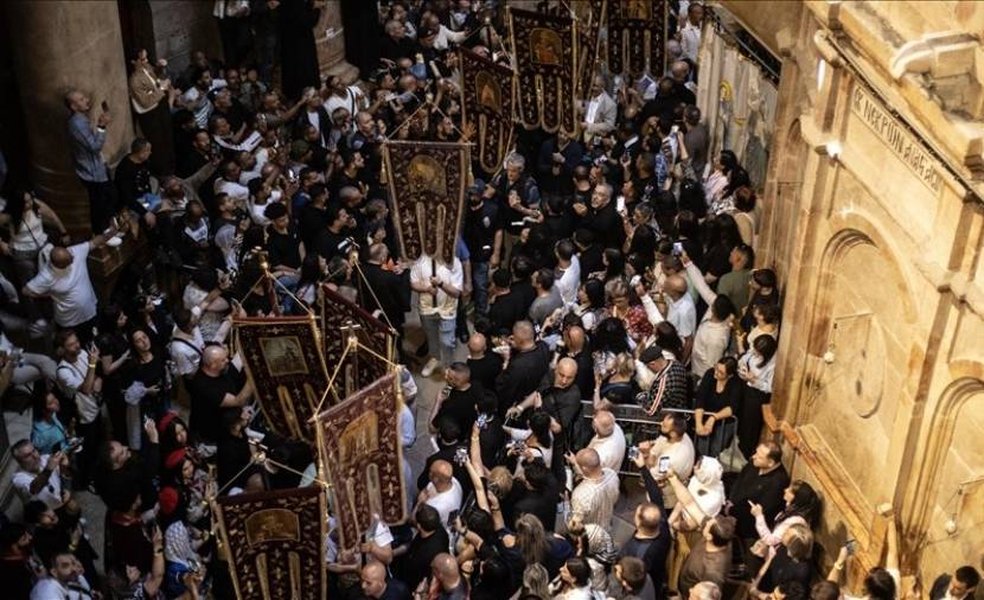
Christians in Jerusalem
The reality of Christians in Jerusalem, the West Bank, and Gaza: an integral part of Palestinian society targeted by occupation policies.
Decline of the Palestinian Christian Demographic Presence
The number of Christians in historical Palestine has sharply declined over the past decades due to systematic policies aimed at altering the demographic composition.
Before 1948, Palestinian Christians made up 12.5% of the population of historical Palestine. Ongoing discrimination and restrictions have steadily reduced their numbers to less than 2% today. In Jerusalem alone, their population fell to under 10,000 by 2026, compared to 50,000 before 1948. This demographic decline reflects the impact of continuous pressures and harsh conditions that drive many to emigrate.
The restrictions on Palestinian Christians extend beyond security and economic aspects to include deep political and theological dimensions.
The “Standing for Justice” Document
Christian Palestinian documents, such as the 2009 “Standing for Justice,” condemned the occupation as a “sin against God” and called for its end. In 2025, theological initiatives encouraged resistance to the occupation, yet ongoing arrests of priests and activists silenced these voices and limited their effectiveness.
Efforts to Change the Demographic Reality
Israel uses propaganda to portray itself as a protector of Christians while continuing to undermine their presence to achieve political objectives, such as emptying Jerusalem of its Christian population. These policies aim to change the city’s demographic balance in favor of a “Jewish Jerusalem,” threatening the city’s multicultural and religious character.
Palestinian organizations and churches regularly issue reports documenting violations against Christians, highlighting the scale and recurrence of the problem.
Summary of Palestine Observatory Reports 2026
The 2026 reports from the “Palestine Observatory” of the Middle East Council of Churches show ongoing and increasing restrictions on Palestinian Christians. These reports emphasize worsening humanitarian and social conditions due to heightened “security operations” and movement restrictions, directly affecting Christians in Jerusalem, the West Bank, and Gaza.
| Type of Violation / Challenge | Description | Recent Examples (2025-2026) |
|---|---|---|
| Attacks on Holy Sites | Desecration of churches and cemeteries, anti-Christian graffiti | 40 attacks on Jerusalem churches in two months (2025), attacks on St. James Monastery (2026) |
| Assaults on Individuals | Physical attacks on clergy and worshippers, arbitrary arrests | Attacks on priests and pilgrims, armed attack in Taybeh (2026) |
| Restriction of Worship | Denial of access to holy sites, limits on worshipper numbers | Unprecedented ban on Palm Sunday Mass, Holy Saturday restrictions |
| Movement Restrictions | Hindrance of travel between cities and areas | Difficulty accessing Jerusalem during holidays, community isolation |
| Economic Pressures | High taxes on churches and institutions | “Arnona” tax on church property |
| Educational Challenges | Shortage of Christian teachers, threats to school continuity | Decline of Christian presence in education, impact on cultural identity |
| Demographic Decline | Sharp drop in Christian population in Palestine | Decrease from 12.5% to under 2%, less than 10,000 in Jerusalem |
Comparative Analysis of Pressures on Palestinian Christians
A radar chart illustrates the intensity of pressures across key areas of life for Palestinian Christians.
This chart shows that “freedom of worship,” “freedom of movement,” and “protection of holy sites” face the highest pressure levels (5/5), reflecting the direct impact of occupation policies. Areas like “personal security” and “economic stability” face high pressure (4/5), while “education and identity” show moderate pressure (3/5), indicating that all aspects of Palestinian Christian life are affected to varying degrees.
Demographic Impact of Christian Emigration
A chart illustrates estimated changes in the proportion of Christians over time and the main drivers of emigration.
It highlights the sharp decline in the Christian population in historical Palestine, from around 12% before 1948 to under 2% today, with expectations that this decline will continue if current conditions persist. These figures clearly reflect the pressures driving Christians to emigrate to safeguard their safety and future.
The ongoing pressures and systematic violations faced by Palestinian Christians pose an existential threat and form part of a broader policy aimed at altering the demographic and cultural reality in the occupied territories. Recent reports up to 2026 emphasize the urgent need for international intervention to protect human rights and religious freedom, ensuring the continuity of the Christian presence in the Holy Land, which remains an integral part of Palestine’s identity and history.