
- مصدر عسكري مسؤول في القيادة العامة للقوات المسلحة الأردنية – الجيش العربي، يصرح بأن منظومات الدفاع الجوي أسقطت فجر الخميس 8 صواريخ إيرانية كانت تستهدف أراضي المملكة
- مدعي عام محكمة الجنايات الكبرى، يقرر توقيف مواطن أردني مشتبه به بقتل فتاة أميركية في إيرلندا، مدة 15 يوما في أحد مراكز الإصلاح والتأهيل
- الهيئة الخيرية الأردنية الهاشمية، تسير قافلة عاشرة من المساعدات الإنسانية إلى الجمهورية اللبنانية الشقيقة، تضم 26 شاحنة محمّلة بالمواد الإغاثية والغذائية والطبية
- أمانة عمّان الكبرى تقول أنها ستقوم صباح غد الجمعة بتنفيذ أعمال إنشاء عبارة صندوقية في شارع الاميرة ثروت في المقطع الواقع من دوار الأمير راشد إلى تقاطع شارع الاميرة ثروت مع شارع الزنجبيل، و إغلاق جزئي وكلي لمسارب الشارع
- عودة أكثر من 203 آلاف لاجئ سوري طوعا من الأردن إلى سوريا منذ 8 كانون الأول 2024 وحتى 30 حزيران حسب المفوضية السامية للأمم المتحدة لشؤون اللاجئين
- استشهاد ثلاثة فلسطينيين وإصابة آخرين ، الخميس، بقصف للاحتلال الإسرائيلي على مدينة غزة
- وزير دفاع الاحتلال الإسرائيلي يسرائيل كاتس يبلغ وزير الحرب الأميركي بيت هيغسيث الخميس بأن الاحتلال عازم على إبقاء قواته في ما يسميها "المناطق الأمنية" التي أنشأتها داخل لبنان وسوريا وقطاع غزة
- يكون الطقس الخميس، حارا نسبياً في أغلب المناطق، وحارًا في البادية والأغوار والبحر الميت والعقبة
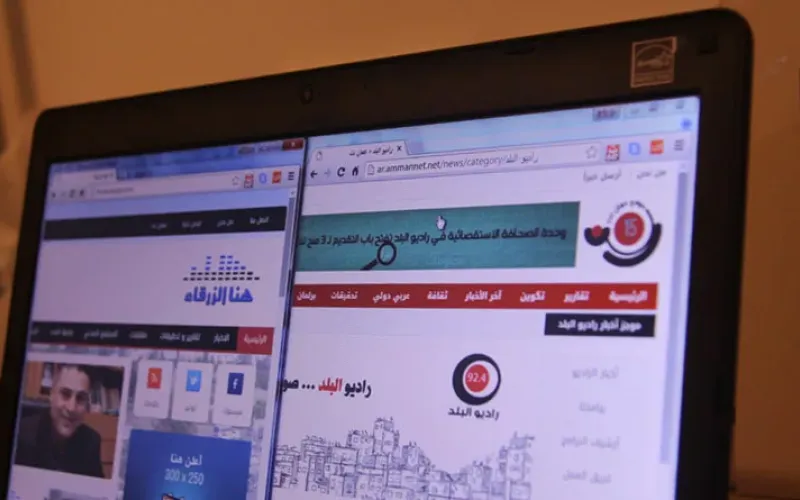
Radio Balad and Amman Net: Giving Voice to the Marginalized in the Digital Age
11/12/2025 - 14:04
When we started working at Radio Balad and Amman Net in 2000, we knew that our mission went beyond simply broadcasting news or music. We were creating a public space that allowed people—especially those whose voices had no place in mainstream media—to be heard. For us, journalism was never just a profession; it was a message and a responsibility to society. That’s why we established a clear charter defining who we are, what we commit to, and what we reject.
Our priorities were clear: the trust of the people is the true capital of any media institution. Therefore, we made truth our compass in every report, presenting events as they are, without distortion or embellishment, while ensuring fairness and listening to all sides, particularly the most vulnerable groups. For us, fairness was not just a professional principle; it was a human value we lived by every day.
Honesty and independence formed our foundation. We rejected any conflicts of interest or attempts to influence our content. No one was allowed to buy our conscience, and we maintained our independence even if it meant losing advertising revenue or facing external pressure. At the same time, we committed to accountability before our audience: if we made a mistake, we acknowledged and corrected it; if we disagreed with a listener or reader, we listened and reconsidered. Journalism, for us, is a continuous dialogue with people, not a platform above them.
We were not merely conveyors of news; we were creating a space reflecting the diversity of our society—from the streets of Amman to its neighborhoods, capturing both the simple and complex concerns of daily life, its joys and frustrations. Eighty-five percent of our radio content focused on local affairs, while keeping an eye on regional and global events, because Jordan is part of a larger context. Even our choice of music was deliberate: we favored fresh, serious voices, avoided commercial triviality, and emphasized values of tolerance and dialogue, rejecting any rhetoric of hate.
In the digital age, new opportunities arose to reach people in ways we could not have imagined a decade ago. By early 2025, Jordan had over 10.7 million internet users, with a penetration rate of 92.5%. YouTube reached 6.45 million users, Facebook 5.45 million, Instagram 4.05 million, and LinkedIn grew to two million members. This expanding digital landscape gave us additional tools to amplify the voices of marginalized communities—through articles, videos, and live broadcasts—while maintaining credibility and fairness as our guiding principles.
Digitalization was not just a technical upgrade; it was a chance to redefine the relationship between media and society. We could reach remote villages, youth facing unemployment or isolation, women confronting daily challenges in education and work, and children whose voices needed to be heard away from politics and disputes. Every interaction—comment, message, or feedback—became part of the dialogue and a tool to improve our work.
Transparency in funding has been an integral part of our commitment: all our sources—local, international, and advertising—are monitored and accountable. We did not allow money to dictate our content, and we remained steadfast in our belief that independent journalism can change lives, even in small ways.
The charter we created was never a static document on a wall; it has been our daily compass in every report, every bulletin, every program. It is a promise to ourselves and our audience: to be honest, independent, and loyal to the mission of community media in Jordan, empowering those who have never had the chance to have their voices heard.
With every challenge posed by the digital era, and every new platform that emerges, Radio Balad and Amman Net remain committed to their mission: to be a tool for the people, not against them, creating a space where everyone stands equal before truth and justice. Community media, when practiced responsibly, is not just a means of conveying news—it is a force that changes reality, fosters dialogue, restores trust between people and institutions, and gives marginalized communities hope that their voices are heard and that their presence matters.